

In today’s fast-paced market, the best RFID systems are not just an option; they are a necessity for staying competitive. Imagine counting your entire inventory in minutes instead of days, with near-perfect accuracy. That’s the power of RFID. As we look towards 2025, these systems are becoming more intelligent, integrated, and indispensable for businesses aiming for peak efficiency and zero headaches in their inventory management.
Why Your Business Can’t Ignore RFID
Traditional inventory methods, like manual counts and barcode scanning, are prone to human error and are incredibly time-consuming. The best RFID systems solve these problems by providing real-time data, automating tracking, and offering insights that were previously impossible to obtain. This technology empowers businesses to make smarter decisions, reduce waste, and ultimately, boost their bottom line.
The Unseen Costs of Inaccurate Inventory
Inaccurate inventory is more than just a minor inconvenience. It leads to real financial losses through overstocking, stockouts, and wasted employee hours. A study by IHL Group found that inventory distortion costs retailers nearly $1.1 trillion globally. The best RFID systems directly combat this by ensuring your data is always up-to-date.

Real-World Transformation: The MINISO Story
To understand the practical impact of modern RFID, let’s look at the case of global retailer MINISO. With a vast and rapidly changing inventory of over 100 new SKUs launched every seven days, their traditional barcode system couldn’t keep up. This resulted in time-consuming, labor-intensive, and often inaccurate inventory counts.
By implementing a RAIN RFID solution in their U.S. stores in March 2024, MINISO achieved a significant transformation. They adopted compact, high-performance RFID tags, enabling easy tagging even for small items such as jewelry and cosmetics.
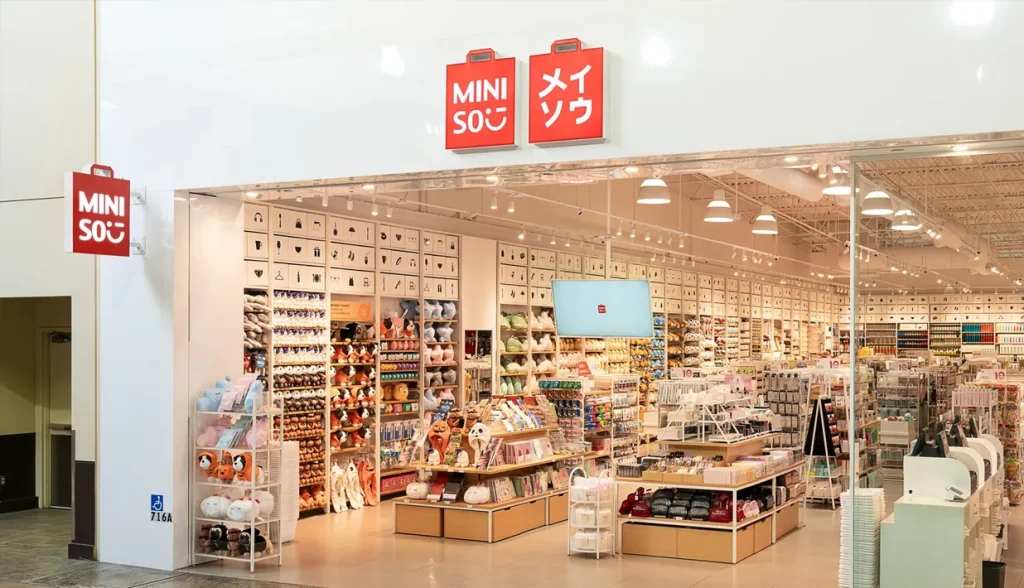
Here’s a breakdown of the improvements:
| Challenge | Barcode System | RFID System |
| Inventory Speed | Days per store | Hours per store |
| Accuracy | Prone to human error | Near 100% accuracy |
| Labor | High, manual scanning | Low, automated scanning |
| Small Items | Difficult to tag | Easily tagged with mini tags |
This is a prime example of how the best RFID systems can revolutionize inventory management for a global brand, leading to improved efficiency, accuracy, and cost savings.
What to Look for in the Best RFID Systems
As you consider upgrading your inventory management, here are the key features to look for in the best RFID systems:
Scalability
Choose a system that can grow with your business. Whether you’re adding new product lines or expanding to new locations, your RFID solution should be able to scale without a complete overhaul.
Advanced Analytics
Modern RFID systems do more than just track items. They provide valuable data on product movement, sales trends, and customer behavior. Look for a system with a robust analytics platform to turn this data into actionable insights.
Support for Diverse Tag Types
As seen with MINISO, the ability to tag a wide variety of products is crucial. Ensure your system supports a range of tag sizes and types, including those designed for challenging materials like metal and liquids.

Conclusion: Your Next Step Towards Flawless Inventory
Transitioning to an advanced inventory system is a critical step for any forward-thinking business. The best RFID systems offer a clear path to eliminating the headaches of manual inventory control and unlocking new levels of efficiency and accuracy. By embracing this technology, you are not just optimizing a process; you are future-proofing your business.
At RFIDsolution, we specialize in providing high-quality, customizable RFID tags and labels tailored to your unique business needs. Whether you are in retail or logistics, our solutions are designed to integrate seamlessly and deliver immediate value. Explore our range of products at rfidsolution.com or contact us today for a consultation to discover how we can help you achieve 100x faster counts with zero headaches.
FAQs
How difficult is it to transition from a barcode system to an RFID system?
The transition can be surprisingly smooth with the right partner. A phased approach is often recommended, starting with a pilot program in a specific department or location. This allows you to work out any kinks and demonstrate the ROI before a full-scale rollout. A good provider will offer comprehensive support, from system design and integration to staff training.
What is the typical return on investment (ROI) for an RFID inventory system?
The ROI for an RFID system can be significant and is typically realized through several areas: reduced labor costs from automated counting, decreased stockouts leading to higher sales, minimized shrinkage, and improved supply chain efficiency. While the initial investment varies depending on the scale of the operation, many businesses report seeing a positive ROI within 12 to 24 months.
Recommended Product





 EN
EN  JA
JA  ZH
ZH