
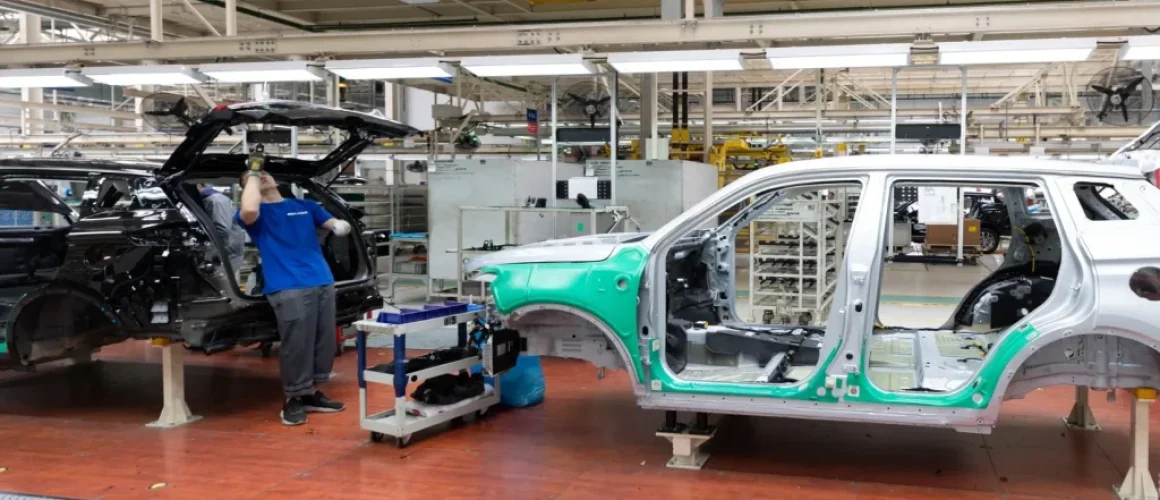
In modern automotive manufacturing, Just-In-Time (JIT) production is regarded as the ultimate goal for efficiency and cost control. As a global leader in the industry, Honda has elevated this lean production philosophy by deeply integrating Radio Frequency Identification (RFID) technology across its global plants. This article explores how Honda leverages RFID to optimise inventory management, ensure seamless production flows, and provide valuable industry insights for B2B partners.
Core Challenges of the Just-In-Time Production Model
The JIT model requires materials to be delivered to the right station, in the right quantity, at the right time. While this significantly reduces inventory carrying costs, it demands extreme supply chain transparency and responsiveness. Before implementing RFID, traditional barcode scanning and manual recording faced several challenges:
- Data Latency: Manual audits fail to provide real-time data, leading to potential production halts due to material shortages.
- High Labour Costs: Scanning thousands of components individually is labour-intensive and prone to human error.
- Asset Tracking Difficulties: Locating and recovering logistics containers, such as returnable crates and pallets, is often inefficient within large facilities.
Honda’s RFID Digital Transformation Practice
To overcome these hurdles, Honda deployed RFID-based smart management systems at its Greensburg, Indiana plant and GAC Honda’s new energy vehicle plant.
1. Lifecycle Tracking of Vehicles and Components
At the Indiana plant, every vehicle entering the assembly line is equipped with a passive RFID tag. These battery-free tags are read by sensors throughout the facility, providing real-time data on precise location and assembly status. This transparency allows production schedulers to adjust logistics plans based on actual progress, achieving true “pull-based” production.
2. Circular Management of Logistics Containers
GAC Honda demonstrates excellence in container management. By installing durable RFID tags on pallets and crates, the plant automates the recording of inbound and outbound movements.
| Management Stage | Traditional Barcode Model | RFID Smart Model | Efficiency Gain |
| Inbound Recording | Manual scanning (10-20s per box) | Batch sensing (instant) | 90% Efficiency Increase |
| Data Accuracy | ~3% error rate due to human factors | Automated collection (near 100%) | Elimination of inventory discrepancies |
| Container Recovery | Difficult to track; high loss rate | Real-time positioning; closed-loop | 25% Reduction in asset loss |
| Information Binding | Paper documents; information silos | Digital binding of orders & containers | Full-process traceability |
3. Digital Kanban and Automated Replenishment
Honda Italia utilises RFID for “Digital Kanban.” When material levels at a workstation drop to a preset threshold, the RFID system automatically triggers a replenishment request to the warehouse. This mechanism eliminates delays inherent in manual inspections, ensuring the continuity of JIT production lines.
Core Advantages of RFID Tags in Inventory Management
Honda’s success proves that RFID is a cornerstone of lean production. For distributors, retailers, and enterprises seeking efficient supply chain solutions, the advantages are clear:
- Non-Line-of-Sight Reading: Readers can identify tags without direct alignment, supporting bulk reading through packaging and significantly shortening audit times.
- Environmental Durability: Tags provided by RFIDSolution are specially encapsulated to withstand high temperatures, oil, and metal interference common in automotive manufacturing.
- Data Storage Capacity: Unlike barcodes, RFID tags store more data (e.g., production dates, batches, quality test results), supporting robust quality traceability.
Conclusion
Honda’s case clearly demonstrates how RFID technology transforms traditional JIT production into a highly intelligent, transparent, and efficient modern manufacturing system. By utilising real-time data collection and automated management, companies can reduce inventory costs and gain greater flexibility in a competitive global market.
If you are looking for solutions to enhance inventory management efficiency or require customised RFID tags, RFIDSolution is ready to support you.
Recommended Product





 EN
EN  JA
JA  ZH
ZH