
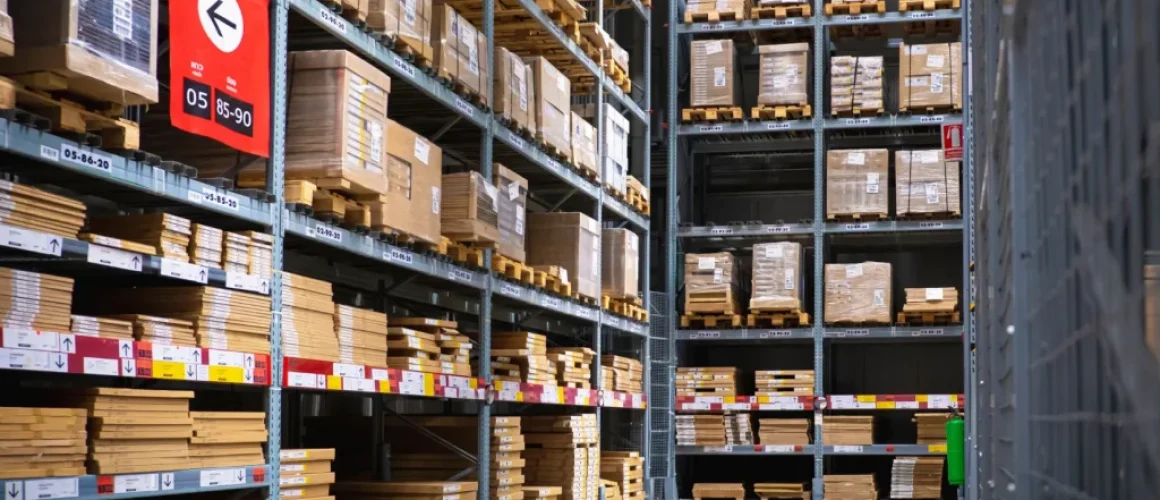
Warehouse shelf labels do more than mark a storage position. When they are built with RFID, they become fixed data points that help us locate stock faster, verify bin positions, and support cleaner warehouse workflows. That is why choosing the right warehouse shelf labels matters before rollout, not after installation.
Why RFID Warehouse Shelf Labels Need a Different Checklist
Unlike carton labels, warehouse shelf labels usually stay in place for long periods. They face rubbing, dust, forklift traffic, scanning from different angles, and sometimes metal shelving. A label that reads well in a sample test can still perform poorly on a live rack if the material, chip, or placement is wrong.
The goal is simple: stable reads, clear location identification, and easy integration with your warehouse process.

1. Check the Shelf Surface Before You Choose the Label
The first thing we check is the mounting surface. Is the shelf plastic, painted steel, galvanized metal, or wire mesh? RFID behaves differently on each one.
What to verify
- Metal or near-metal surface
- Flat or curved shelf edge
- Indoor dry area or cold storage
- Permanent or changeable location setup
If your warehouse shelf labels sit directly on metal, standard inlays may lose read performance. In that case, an on-metal RFID label or a spacer-based structure is usually the safer choice. GS1 also emphasizes that standard-based RFID identification works best when tag design and data structure are aligned with the operating environment.
2. Check Read Distance and Reader Angle in Real Shelf Conditions
A warehouse may use handheld readers, forklift readers, or fixed portals. Each setup changes how warehouse shelf labels should be designed.
What we look at during testing
- Expected read distance
- Reader power and frequency region
- Scan direction from aisle or side
- Nearby labels that may create cross-reads
A common mistake is testing a label on a desk instead of on the actual rack. Shelf labels should be tested where they will be used, at the same height, spacing, and reader angle. This helps avoid reading the wrong location or missing the correct one during picking.

3. Check the Data Structure, Not Just the Printing
Good warehouse shelf labels are not only durable; they also need clean encoding logic. If the EPC or internal ID format is inconsistent, the label may still scan but fail inside your WMS or ERP flow.
Use this quick data checklist
| Check item | Why it matters |
| Unique RFID ID | Prevents duplicate shelf records |
| Human-readable text | Helps staff confirm locations visually |
| Barcode backup | Useful for mixed-system operations |
| Standardized naming | Keeps WMS mapping cleaner |
| Encoding verification | Reduces commissioning errors |
GS1 guidance on warehouse RFID use stresses the importance of agreeing on how data is encoded across systems and partners before deployment.
4. Check Adhesive, Face Material, and Print Durability
Warehouse environments are practical, not gentle. Warehouse shelf labels may be wiped, hit, scratched, or exposed to temperature swings. That makes material selection just as important as chip selection.
Three material questions we always ask
Will the label stay in place?
Adhesive must match the shelf material and temperature.
Will the print stay readable?
For fixed locations, fading or smudging creates manual errors over time.
Will the label peel during cleaning or movement?
Edge lifting is a common reason labels fail early.
For longer-life projects, many buyers prefer synthetic facestock, stronger adhesives, and a print method suited to frequent handling.

5. Check Whether the Label Supports Future Expansion
The best warehouse shelf labels do not only solve today’s shelf ID problem. They also support future changes such as zone relabeling, warehouse expansion, multi-site rollout, or combined barcode-plus-RFID workflows.
Think ahead before ordering
- Will you add more aisles or bins later?
- Do you need custom size, logo, or color coding?
- Will your team use mobile scanning and fixed readers together?
- Do you want the same label format across multiple warehouses?
This is where custom RFID label planning helps. A shelf label should fit your process, not force your process to fit the label.
A Real Example of Why This Matters

Conclusion
Choosing RFID warehouse shelf labels is really about choosing read stability, data consistency, and long-term usability. When the material, chip, encoding, and layout are checked in advance, shelf labels become a reliable part of warehouse execution instead of a recurring maintenance issue. After reading this, you can review your current shelf labeling plan, or explore custom RFID label options and project support through RFIDSolution at rfidsolution.com.
FAQs
What is the best RFID label type for metal warehouse shelves?
For metal shelving, on-metal RFID labels or labels designed with isolation layers are usually the better option because they are built to maintain read performance near conductive surfaces.
Can warehouse shelf labels include both RFID and barcodes?
Yes. Many projects use dual-format warehouse shelf labels with RFID for faster digital reads and barcodes for visual backup or mixed-system compatibility.
Recommended Product

Handheld INVENTRACK™ RFID Inventory & Warehouse Mgt Test Kit – 1 Year Demo Access
No Setup. No Subscription. Get Android UHF RFID Handheld Reader with 1-Year Free App Access. WHAT’S INVENTRACK™ RFID WMS The UHF RFID Handheld Reader integrates high speed RFID hardware with a ready to use software platform, providing a practical solution for modern inventory operations. Built around the Impinj® E710 engine, it forms a solid […]


 EN
EN  JA
JA  ZH
ZH