
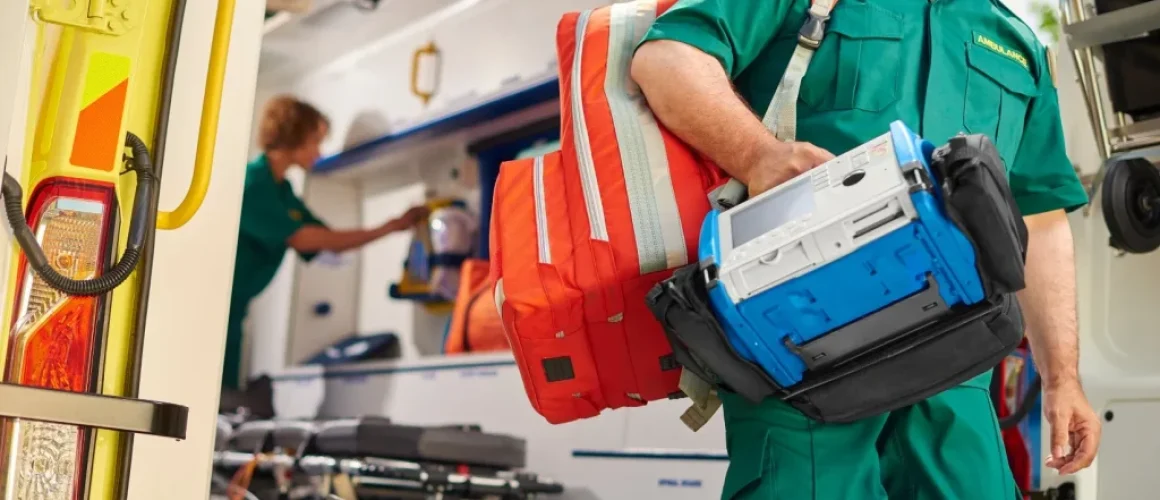
Healthcare organizations rely on thousands of medical assets every day, from infusion pumps and wheelchairs to portable ultrasound machines. However, keeping track of these assets can be challenging, leading to lost equipment, wasted staff time, and unnecessary costs. RFID in healthcare provides a smarter way to identify, locate, and manage critical assets in real time. By improving visibility and automating tracking, hospitals can streamline operations, increase equipment utilization, and ultimately support better patient care.
1. What Is RFID in Healthcare?

RFID (Radio Frequency Identification) is a wireless technology that uses RFID tags, readers, and software to automatically identify and track physical objects without requiring direct line of sight. In healthcare environments, RFID enables hospitals to capture real-time information about assets, supplies, and people with minimal manual intervention.
Today, RFID in healthcare supports a wide range of applications, including:
- Medical asset tracking – Monitor the location and status of equipment such as infusion pumps, ventilators, wheelchairs, and ECG machines.
- Inventory management – Automatically track medical supplies and consumables to reduce shortages and overstocking.
- Medication management – Improve traceability of medications throughout storage and distribution.
- Patient identification – Help verify patient identity and reduce identification errors.
- Laboratory sample tracking – Maintain accurate records of specimens from collection to testing.
Among these applications, medical asset tracking has become one of the most widely adopted because hospitals manage thousands of movable devices that are frequently shared across departments. Without accurate visibility, staff often spend valuable time searching for equipment instead of focusing on patient care.
2. Common Challenges Hospitals Face in Managing Medical Assets
Hospitals depend on a wide range of mobile medical equipment to deliver timely patient care. However, as assets move frequently between departments, keeping track of their location and availability becomes increasingly difficult. Traditional methods, such as manual inventories or barcode-based tracking, often fail to provide real-time visibility.
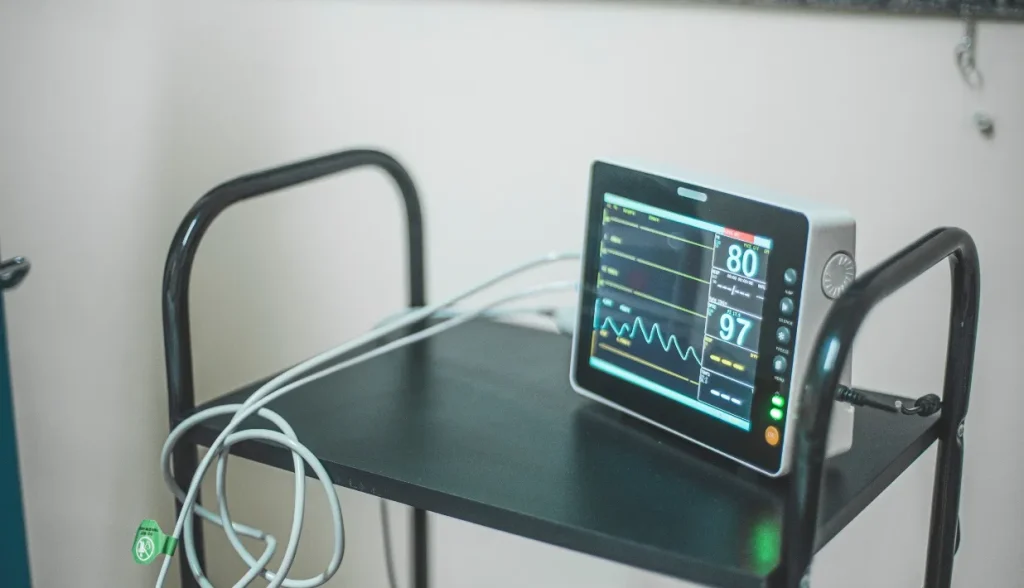
Some of the most common challenges include:
2.1 Difficulty Locating Critical Equipment
Medical devices are constantly moved between wards, operating rooms, emergency departments, and storage areas. When staff cannot quickly locate the equipment they need, valuable time is lost, and patient care may be delayed.
2.2 Low Asset Utilization
Hospitals may own enough equipment, but without accurate location data, some assets remain underused while others are repeatedly purchased or rented because they cannot be found when needed.
2.3 Time-Consuming Manual Inventory
Routine asset audits often require staff to manually search for equipment and update records. This process is labor-intensive, prone to errors, and difficult to perform regularly in busy healthcare environments.
2.4 Equipment Loss and Unauthorized Movement
Medical assets can be misplaced, transferred without documentation, or even removed from designated areas. Without continuous monitoring, these incidents may go unnoticed until inventory checks are performed.
2.5 Incomplete Maintenance Records
Preventive maintenance is essential for ensuring equipment reliability and regulatory compliance. However, when asset locations and usage history are not accurately recorded, scheduling inspections and servicing becomes more challenging.
These operational challenges not only increase costs but also reduce efficiency and place additional pressure on healthcare professionals. As hospitals continue to expand and manage larger inventories of medical equipment, many are turning to RFID technology to gain real-time visibility and improve asset management.
3. How RFID Improves Healthcare Asset Tracking

An RFID asset tracking system combines RFID tags, readers, and management software to provide real-time visibility into the location and status of medical equipment. Instead of relying on manual searches or scheduled inventory checks, hospitals can automatically capture asset data as equipment moves throughout the facility.
A typical RFID workflow includes the following steps:
3.1 Tag Medical Assets
Each piece of equipment is fitted with a durable RFID tag containing a unique identification number. Commonly tagged assets include:
- Infusion pumps
- Wheelchairs
- Ventilators
- Portable ultrasound machines
- ECG monitors
- Defibrillators
- Medical carts
Once tagged, every asset can be uniquely identified throughout its lifecycle.
3.2 Capture Asset Movement Automatically
Fixed RFID readers installed at strategic locations automatically detect tagged equipment as it moves through the hospital. Handheld readers can also be used for rapid inventory checks and locating specific assets.
3.3 Update Asset Information in Real Time
The collected RFID data is transmitted to centralized asset management software, where asset information is continuously updated. Staff can access a unified dashboard to view equipment locations, movement history, maintenance status, and inventory records.
3.4 Support Daily Asset Management
With accurate and up-to-date asset information available in one system, hospital staff can monitor equipment, perform inventory audits, manage maintenance schedules, and generate operational reports more efficiently.
4. Benefits of RFID in Healthcare
By providing accurate, real-time information about medical assets, RFID helps hospitals improve operational efficiency while supporting better patient care. Key benefits include:
4.1 Real-Time Asset Visibility
RFID provides a live view of where medical equipment is located, reducing the uncertainty associated with manual tracking. Staff can quickly determine whether an asset is in use, available, or undergoing maintenance.
4.2 Faster Equipment Retrieval

Instead of spending valuable time searching multiple departments for essential equipment, healthcare staff can locate tagged assets much more quickly. This helps reduce delays during routine care and emergency situations.
4.3 Higher Asset Utilization
Real-time usage data allows hospitals to identify underutilized or idle equipment and redistribute assets where they are needed most. Better utilization can reduce unnecessary equipment purchases and rental costs.
4.4 Reduced Equipment Loss
Continuous tracking helps minimize the risk of misplaced or unauthorized asset movement. Hospitals can maintain greater control over valuable medical equipment and reduce replacement expenses.
4.5 Simplified Maintenance and Compliance
Accurate asset records make it easier to schedule preventive maintenance, document service history, and demonstrate compliance with healthcare regulations and accreditation requirements.
5. RFID vs Barcode in Healthcare
Both RFID and barcode technologies are widely used in healthcare to identify and manage assets. While barcode systems remain a cost-effective solution for many applications, RFID offers significant advantages when hospitals require real-time visibility and automated asset tracking.

The choice between the two depends on factors such as the type of assets being managed, the required level of automation, and operational goals.
| Feature | RFID | Barcode |
| Line-of-sight required | No | Yes |
| Read multiple items simultaneously | Yes | No |
| Reading speed | Fast | Slower |
| Data capture | Automatic | Manual scanning |
| Real-time asset visibility | Yes | Limited |
| Initial implementation cost | Higher | Lower |
5.1 When Barcode Is a Good Choice
Barcode systems are well suited for applications where assets are scanned manually at specific checkpoints. They are relatively inexpensive to implement and work effectively for tasks such as medication labeling, patient records, and inventory management in smaller healthcare facilities.
However, because each barcode must be scanned individually and requires a clear line of sight, keeping location information up to date often depends on consistent staff participation.
5.2 When RFID Is the Better Option
RFID is ideal for managing high-value or frequently moved medical assets. Tags can be read automatically without direct visibility, allowing hospitals to monitor equipment movement with minimal manual effort.
Rather than replacing barcode technology entirely, many healthcare organizations use both systems together. Barcodes remain effective for low-cost items and routine identification tasks, while RFID provides greater efficiency for tracking critical assets that require real-time visibility and frequent movement throughout the hospital.
6. Why Hospitals Need an RFID Asset Tracking System
RFID tags and readers are essential for collecting asset data, but they are only one part of an effective healthcare asset tracking solution. Without a centralized management platform, hospitals may still struggle to organize asset information, monitor equipment status, and turn raw data into actionable insights.

An RFID asset tracking system brings together data from RFID devices into a single platform, allowing healthcare teams to access accurate asset information, search for equipment, review movement history, and support maintenance planning from one centralized interface.
For healthcare organizations looking to improve medical asset management, Trakon™ asset tracking system provides an RFID-based platform that helps hospitals manage equipment more efficiently through centralized visibility, intelligent asset monitoring, and streamlined operational workflows. By integrating RFID hardware with powerful management software, hospitals can gain greater control over critical medical assets while supporting more informed operational decisions.
7. Conclusion
From reducing equipment search time to improving asset utilization and supporting preventive maintenance, RFID helps healthcare organizations optimize resources while enabling staff to focus more on patient care.
If your hospital is planning to modernize asset management, an integrated RFID solution can make implementation more effective. RFIDSolution provides a reliable asset tracking system to help healthcare organizations track critical equipment, improve inventory visibility, and streamline day-to-day operations across the entire facility.
FAQs
1. Can RFID be integrated with existing hospital management systems?
Yes. Modern RFID asset tracking systems can often integrate with existing hospital information systems (HIS), computerized maintenance management systems (CMMS), enterprise resource planning (ERP) platforms, and other healthcare software. Integration helps create a centralized view of asset locations, maintenance records, and operational data.
2. Is RFID safe to use in hospitals?
Yes. RFID technology is widely used in healthcare environments around the world. When properly designed and deployed, RFID systems operate within regulated radio frequency standards and are suitable for tracking medical assets in hospitals.
3. How long do RFID tags last?
Passive RFID tags typically have a long service life because they contain no internal battery. Under normal operating conditions, they can remain functional for many years, making them suitable for long-term asset management.




 EN
EN  JA
JA  ZH
ZH