
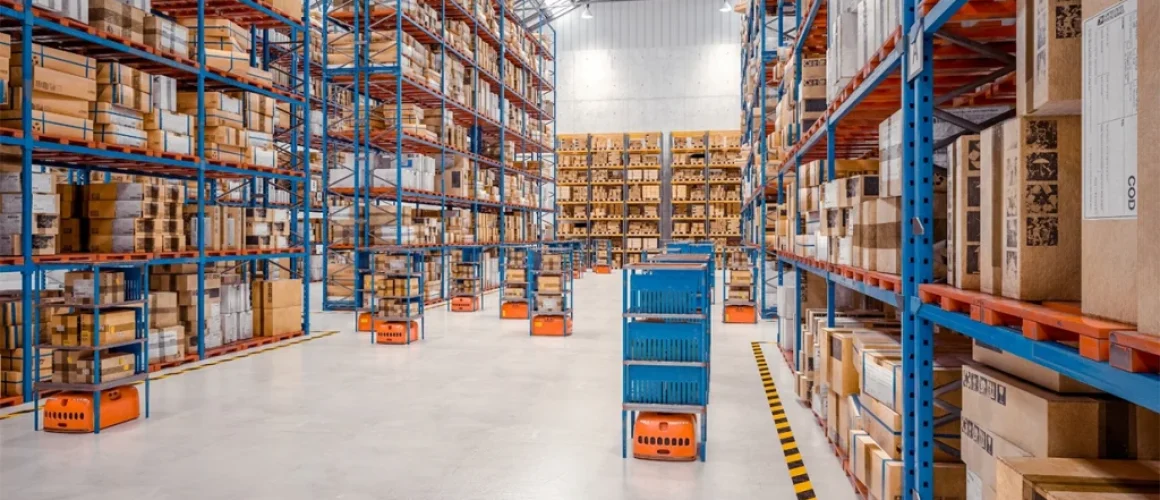
Modern warehouses are under pressure to ship faster, operate with fewer errors, and do more with limited labor. Manual tracking and barcode-only processes often struggle to keep up with real-time inventory demands. This is where RFID for warehouse management becomes powerful.
This guide explains how RFID and WMS work together, why the combination is transforming warehouse operations, and whether the investment makes sense for your facility.
1. The Technical Architecture of Real-Time Visibility
At its core, a sophisticated RFID ecosystem is far more than just tags and readers; it is a synchronized data orchestration layer. Unlike barcodes, which require individual orientation and physical proximity, Radio Frequency Identification utilizes electromagnetic fields to identify and track tags attached to objects automatically. This fundamental shift from optical scanning to radio-wave detection allows for a non-linear approach to data collection, where the physical constraints of the warehouse no longer dictate the speed of information flow.

The true power lies in the Electronic Product Code (EPC). By assigning a unique digital identity to every single unit, the system creates a “digital twin” for every item in the facility. This allows for:
- Serialized Tracking: Distinguishing between two identical items based on their production batch, expiration date, or movement history.
- Bulk Processing: Reading hundreds of tags simultaneously as a pallet passes through a portal, reducing receiving times from hours to minutes.
- Non-Line-of-Sight Scanning: Identifying items buried deep within a container or high on a shelf without needing to move them, which is a game-changer for high-density storage environments.
2. Streamlining the Inbound and Outbound Lifecycle
The implementation of RFID for warehouse management fundamentally alters the physics of the loading dock. In a traditional setup, inbound logistics are often a bottleneck, plagued by manual verification and data entry errors. When a shipment arrives, the pressure to unload quickly often leads to “blind receiving,” where items are entered into the system without proper verification, leading to downstream discrepancies that haunt the operation for months.

2.1 Automated Receiving and Verification
When goods arrive, automated portals can scan entire shipments in seconds. RFID warehouse management system (WMS) instantly cross-references the captured EPC data against the Advanced Shipping Notice (ASN). If a discrepancy is found—such as a missing item, an incorrect variant, or even a product that was supposed to be shipped to a different facility—the system triggers an immediate alert.
This “validation at the gate” ensures that the inventory record is 100% accurate from the moment it enters the four walls of the warehouse. This level of automation not only speeds up the process but also allows staff to focus on high-value tasks rather than repetitive scanning.
2.2 Precision in Order Fulfillment and Outbound Logistics
On the outbound side, RFID ensures that the right product reaches the right customer. Picking processes are optimized through real-time location data. Some advanced systems even utilize visual indicators, such as LED-assisted tags, to guide workers to the exact bin location, virtually eliminating the “search time” that accounts for a significant portion of labor costs.
This is particularly useful in large-scale facilities where finding a single small item can be like finding a needle in a haystack. Before a shipment leaves, a final RFID scan verifies the contents against the delivery order, providing a fail-safe against shipping errors and reducing the costly overhead of returns and customer dissatisfaction.
3. Solving the “Ghost Inventory” Crisis
One of the most persistent challenges in logistics is the discrepancy between the WMS and the physical reality on the floor—often referred to as “ghost inventory.” Regular cycle counting is labor-intensive and often inaccurate when done manually, leading to situations where the system says an item is in stock, but the picker finds an empty shelf.

With RFID, stocktaking evolves from a disruptive annual event into a seamless, continuous process. Handheld or overhead readers can perform full-facility counts with 99.9% accuracy in a fraction of the time. This real-time synchronization allows managers to:
- Identify Shrinkage Instantly: Detect missing items in real-time rather than discovering losses months later during a manual audit.
- Optimize Reorder Points: Maintain leaner safety stocks by having absolute confidence in current inventory levels, freeing up working capital that would otherwise be tied up in “just-in-case” stock.
- Enhance Multi-Site Visibility: Visualize stock movements across different locations or retail branches with a single source of truth, enabling smarter stock transfers and reducing the need for new procurement.
4. The Synergy of Data and Physical Operations
A truly intelligent warehouse doesn’t just collect data; it acts on it. The most effective deployments integrate RFID hardware with a robust software platform that manages the “logic” of the warehouse. This platform acts as the brain, interpreting the raw radio signals into actionable business intelligence. It bridges the gap between the physical movement of goods and the digital records that govern the business.

For instance, internal transfers and stock adjustments are no longer manual log entries. As an item moves from the receiving area to a high-density storage zone, the system automatically updates its location based on the readers it passes. This level of automation extends to returns management as well. Returned goods can be authenticated and reintegrated into the “available for sale” inventory with a single touch, maintaining the velocity of the circular supply chain. By automating these micro-transactions, the warehouse becomes a self-correcting environment where human error is minimized.
5. RFID vs Barcode in Warehouse Management Systems
| Factor | Barcode | RFID |
| Line of sight required | Yes | No |
| Items read at once | One-by-one | Dozens in seconds |
| Human involvement | High | Low |
| Error rate | Moderate | Very low |
| Speed at dock doors | Slow | Instant bulk read |
| Best for | Small/simple ops | High-volume/complex ops |
6. Deep Dive: Overcoming Implementation Challenges
While the benefits are clear, the path to a fully automated warehouse requires careful planning.

One of the primary considerations is the environment itself. Metal shelving and liquid products can interfere with radio signals, requiring specialized tags and strategic reader placement. Modern solutions have addressed these issues through “on-metal” tags and sophisticated filtering algorithms that can distinguish between relevant signals and background noise.
Furthermore, the integration with existing ERP and WMS systems is crucial. The goal is not to create a data silo but to enhance the existing ecosystem. A well-designed RFID layer should feed real-time data into the broader supply chain management software, providing a level of detail that was previously impossible. This includes tracking the “dwell time” of items in specific zones, identifying bottlenecks in the picking path, and even monitoring the performance of individual warehouse zones.
7. Future-Proofing with Intelligent Automation
As we look toward 2026 and beyond, the role of RFID for warehouse management is expanding into the realm of the Internet of Things (IoT) and Artificial Intelligence (AI). We are seeing the rise of:
- Sensor-Integrated Tags: Tags that monitor temperature or humidity for sensitive pharmaceuticals and perishables, providing a full “chain of custody” record.
- AI-Driven Predictive Analytics: Using historical movement data captured by RFID to predict future bottlenecks and optimize warehouse layouts dynamically.
- Robotic Integration: Autonomous mobile robots (AMRs) equipped with RFID readers that perform “roving” inventory checks without human intervention, ensuring the warehouse is audited every single night.

8. Conclusion
The adoption of RFID for warehouse management represents a fundamental shift in how we perceive and interact with physical assets. By providing a transparent, real-time window into every corner of the facility, it empowers leaders to make data-driven decisions that drive efficiency and customer satisfaction.
RFIDSolution provide reliable RFID Warehouse Management System, helping you transform warehouse operations with real-time tracking and intelligent automation. Contact us to start your RFID journey today.



 EN
EN  JA
JA  ZH
ZH