
As we approach the critical compliance milestones of 2026, brands entering the European market are racing to implement the EU Digital Product Passport (DPP). This regulation, designed to foster a circular economy and enhance consumer trust, requires brands to provide accessible, verifiable data for every item sold within the EU market. However, for high-value brands in luxury, spirits, and pharmaceuticals, “accessible data” is only half the battle. The real challenge lies in ensuring that this data is authentic and tamper-proof.
In this landscape, NFC Brand Protection has emerged as the essential engine for secure, verifiable transparency. By bridging the gap between physical products and secure digital identities, NFC technology is not just a tool for compliance—it is the cornerstone of modern brand integrity as we head into 2026 and beyond.
What Exactly is NFC Brand Protection?
To understand its role in EU regulations, one must first define what true NFC Brand Protection entails. Unlike standard Near Field Communication (NFC) used for simple tasks like sharing a digital business card, a dedicated brand protection system is a multi-layered security framework.
At its core, NFC Brand Protection utilizes advanced cryptographic chips, such as the NXP® NTAG® 424 DNA, to assign a unique, non-clonable digital identity to each physical product. When a consumer or auditor taps the product with a smartphone, the chip generates a Secure Unique NFC (SUN) message—a dynamic, encrypted URL that changes with every single tap. This means that even if an attacker attempts to copy the URL, the server will immediately recognize it as a “replay” and flag the item as suspicious.

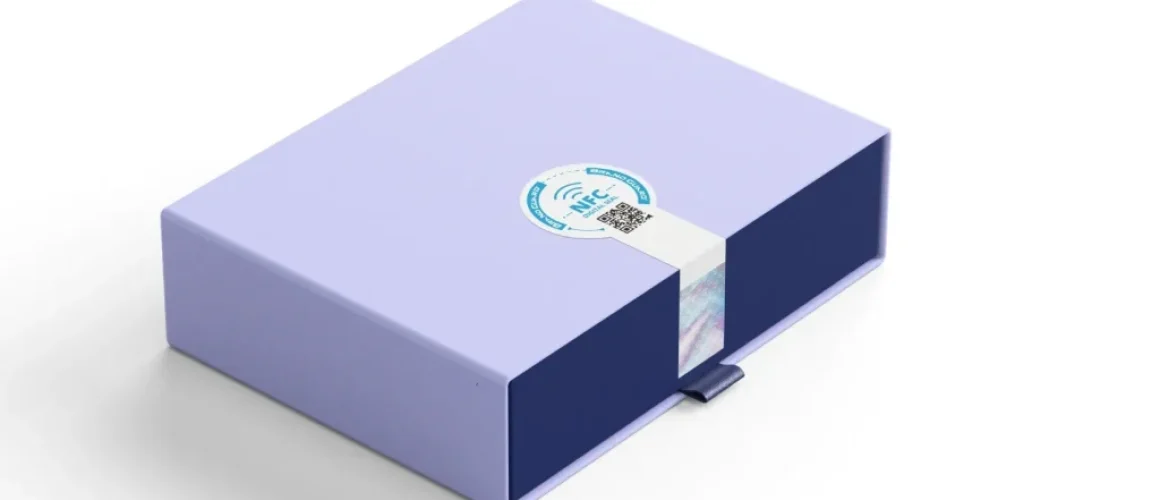
A professional system like the BrandGuard™ NFC Authentication System integrates this hardware-level security with a secure cloud verification platform. This creates a “closed-loop” environment where the product’s authenticity is verified in real-time, without the need for a dedicated mobile app.
Comparing Identification Technologies: Why NFC Wins for DPP
When preparing for EU DPP compliance in 2026, brands often evaluate various identification technologies. The table below compares the most common methods against the rigorous requirements of high-stakes brand protection.
| Feature | Static QR Codes | Barcodes | Biometrics/OCR | NFC Brand Protection |
| Security Level | Low (Easily copied) | Very Low | High | Ultra-High (Encrypted) |
| Clonability | High | High | Low | Virtually Impossible |
| User Experience | Camera-based | Scanner-based | Complex/Slow | Instant Tap (No App) |
| Durability | Low (Surface-level) | Low | N/A | High (Embedded) |
| Data Capacity | Limited | Minimal | N/A | High (Cloud-Linked) |
| DPP Compliance | Basic | No | No | Ideal (Secure & Seamless) |
While QR codes are cost-effective for low-value goods, they fail to meet the “authenticity” threshold required for luxury and regulated industries. NFC Brand Protection provides a tamper-evident, permanent link between the physical item and its digital passport, ensuring that the sustainability and origin data presented to the EU authorities is genuine.
How NFC Brand Protection Powers EU DPP Compliance
The EU’s Digital Product Passport is not just about listing materials; it’s about establishing a “Chain of Trust.” Here is how NFC Brand Protection facilitates this:
1. Immutable Data Integrity
The DPP requires a “Digital Twin” for every product. If this twin can be easily faked, the entire regulatory framework collapses. NFC Brand Protection ensures that the link to the product’s life-cycle data—from raw material sourcing to recycling instructions—is anchored in a secure, hardware-encrypted chip that cannot be altered by third parties.
2. Combating Grey Market and Counterfeits
EU regulations increasingly focus on eliminating illegal trade. By implementing a system like BrandGuard™, brands can track the movement of individual units across the globe. If a product intended for the Asian market appears in a European boutique, the system’s geo-location analytics can flag the diversion instantly, protecting both the brand’s revenue and its regulatory standing.

3. Enhancing the Circular Economy
A key goal of the DPP is to enable easier repair and recycling. When a product reaches the end of its life, a recycler can simply tap the embedded NFC tag to access specific dismantling instructions or material compositions. Because NFC tags can be embedded inside the product (e.g., within the lining of a luxury handbag or the glass of a perfume bottle), they remain functional long after paper labels or surface-printed QR codes have worn away.
Beyond Compliance: The Strategic Value of BrandGuard™
Forward-thinking brands view the 2026 mandate not as a burden, but as a strategic opportunity to deepen consumer relationships.
With the BrandGuard™ NFC Authentication System, the moment of authentication becomes a powerful marketing touchpoint. Once a customer verifies their purchase is genuine and compliant with EU standards, the brand can offer:
•Exclusive Content: Behind-the-scenes videos of the craftsmanship process.
•Loyalty Integration: Automatic registration for warranties or rewards programs.
•Direct-to-Consumer (D2C) Insights: Real-time data on where and when consumers are interacting with the product.
By choosing a comprehensive NFC Brand Protection strategy, you are not just checking a regulatory box; you are building a future-proof bridge to your customers.
Preparing for the Future of Identification
The era of “anonymous” products is ending. The EU Digital Product Passport is the first of many global regulations that will demand higher levels of transparency and security. For brands that value their reputation, the choice of identification technology is critical.

Don’t wait for the 2026 deadline to arrive. Start securing your supply chain and your brand’s future today. If you are ready to see how NFC Brand Protection can transform your compliance strategy, we recommend starting with our BrandGuard™ Sample Kit. Experience the power of NTAG 424 DNA technology firsthand and discover why leading brands are making the switch to secure, encrypted NFC solutions.
FAQs
Q1: Will implementing NFC Brand Protection significantly increase my packaging costs?
While the unit cost of an encrypted NFC chip is higher than a printed QR code, the ROI is found in the drastic reduction of counterfeit losses, the elimination of grey market diversion, and the automation of EU DPP compliance. For high-value goods, the cost of the tag is a negligible fraction of the product’s retail value compared to the protection it offers.
Q2: Can our existing ERP system, such as Odoo, sync with the BrandGuard™ platform?
Yes. Modern NFC Brand Protection systems are designed for interoperability. Through API integrations, data collected from the InvenTrack™ RFID WMS or the BrandGuard™ cloud can be seamlessly synced with ERPs like Odoo, ensuring that your inventory management and regulatory reporting are always in sync.
Q3: Does the EU DPP regulation specifically mandate NFC technology?
The regulation is “technology-neutral,” meaning it requires a data carrier but doesn’t name a specific one. However, it does mandate that the data must be accessible, durable, and authentic. Given the security vulnerabilities of QR codes and the need for durability in a circular economy, NFC is widely recognized by industry experts as the most viable technology for high-end and durable goods.
Q4: Do consumers need to download an app to access the Digital Product Passport via NFC?
No. One of the greatest advantages of the BrandGuard™ system is that it works natively with modern iPhones and Android devices. A simple tap opens the secure URL in the phone’s default browser, providing an frictionless experience for the consumer while maintaining bank-grade security in the background.
Recommended Product

BrandGuard™ NFC Authentication Sample Kit
Validate BrandGuard™ secure NFC authentication with real encoded tags and live cloud verification, plus a branded verification page and 60-day dashboard trial access. What’s Included? Secure NFC tags (NTAG®424DNA TT) Authentication test landing page 60-day cloud dashboard access Technical documentation Overview Test the BrandGuard™ secure NFC authentication system with real encoded tags and live […]



 EN
EN  JA
JA  ZH
ZH