
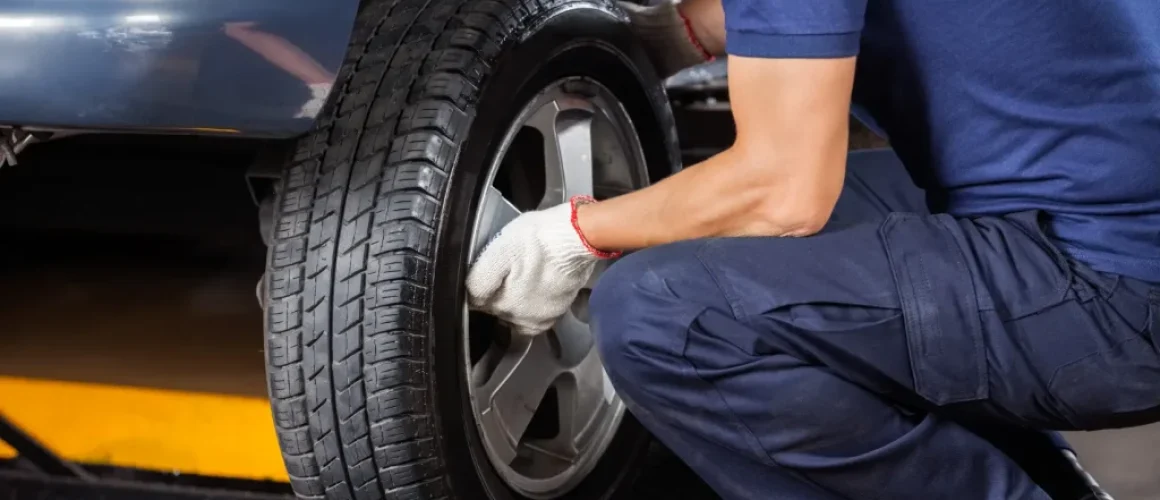
RFID tire tracking gives each tire a durable electronic identity that can follow it from production to warehouse storage, dealer distribution, fleet use, maintenance, and retirement.
Tires are difficult to manage with visual checks alone. The same model may have different sizes, batches, serial numbers, production dates, and service histories. In a warehouse, tires are stacked, moved in bulk, and often handled quickly. In fleet operations, a tire may be installed, rotated, repaired, retreaded, removed, and reused across different vehicles.
When records depend only on paper, barcode scans, or manual entry, gaps appear easily. One wrong scan can affect inventory. One missing service record can affect maintenance planning. One unclear tire identity can make warranty, recall, or retread decisions harder than they should be.
RFID tire tracking helps reduce those gaps by linking every tire to a unique RFID record.
Why Tire Tracking Is Hard
A tire is not a simple inventory item. It is a product first, then often becomes a long-life asset.
Manufacturers need to identify tires by batch and production data. Warehouses need to count and locate tires quickly. Dealers need to avoid shipment and model-matching errors. Fleets need to know which tire is installed on which vehicle, how long it has been used, and whether it should be repaired, retreaded, or retired.
| Tracking Challenge | Operational Risk |
| Similar tire appearance | Wrong model, size, or batch selected |
| Stacked storage | Slow or incomplete manual counting |
| Barcode damage or obstruction | Missed scans during handling |
| Long service life | Maintenance history becomes fragmented |
| Tire rotation and replacement | Records lose connection to the physical tire |
| Warranty or recall needs | Harder to confirm tire identity and history |
RFID is useful because it gives the tire a machine-readable identity that is harder to lose during normal movement.
What Is RFID Tire Tracking?
RFID tire tracking uses RFID tire tags or RFID tire labels to identify individual tires. Each tag carries a unique electronic code. That code can be linked to key tire data such as:
- tire model
- size and specification
- production batch
- serial number
- warehouse location
- dealer shipment record
- vehicle installation
- mileage or usage history
- repair, retread, or retirement status
Most tire tracking applications use UHF RFID because it supports contactless reading and can work with handheld readers, fixed readers, warehouse gates, or production-line checkpoints.
The tag format depends on the use case. Some projects use embedded RFID tire tags during manufacturing. Others use surface-mounted RFID labels or durable tags for warehouse, dealer, or fleet tracking.

RFID Tire Tags vs Barcode Labels
Barcode labels can work for basic identification, especially in controlled warehouse processes. But tires are often moved, stacked, rubbed, exposed to dirt, or handled in conditions where visual scanning becomes slow.
| Factor | Barcode Tire Label | RFID Tire Tag |
| Reading method | Line-of-sight scan | Contactless RFID reading |
| Tire stacking | Hidden labels are hard to scan | More efficient for bulk checks |
| Durability | Print can wear or be covered | Better for long-term identity |
| Data use | Basic product information | Full lifecycle record |
| Best fit | Manual warehouse scan | Manufacturing, inventory, fleet, lifecycle tracking |
For many operations, barcode and RFID can work together. Barcode remains useful for manual backup. RFID improves speed, identity control, and lifecycle visibility.
Where RFID Helps Across the Tire Lifecycle
RFID tire tracking is strongest when one tire needs to stay identifiable across several stages.
| Stage | How RFID Helps |
| Manufacturing | Links tire identity to production batch, specification, and quality data |
| Warehouse storage | Speeds up stock checks and reduces model or batch confusion |
| Dealer distribution | Verifies outbound and inbound tire movement |
| Fleet installation | Connects a tire to a vehicle, axle position, or service record |
| Maintenance | Tracks rotation, inspection, repair, mileage, and replacement |
| Retread and repair | Keeps history connected to the same tire casing |
| Warranty and recall | Supports traceability by tire identity, batch, or usage record |
| Retirement | Confirms when a tire should leave active service |
The biggest benefit is continuity. A tire record should not stop at the warehouse door. For fleets, the value often begins after installation.
What Makes a Good RFID Tire Tag?
Tire environments are not friendly to RFID. Rubber, steel belts, pressure, heat, movement, and handling conditions can all affect tag choice and reading performance.
A suitable RFID tire tag should be selected based on real tire conditions, not only a catalog reading distance.
Key points to check include:
- embedded or surface-mounted tag format
- UHF RFID performance around rubber and steel structures
- resistance to heat, pressure, friction, and handling
- stable encoding and unique ID control
- compatibility with handheld and fixed RFID readers
- readability on stacked, stored, or moving tires
- fit with tire manufacturing, warehouse, or fleet software
Testing should be done on actual tires. A tag that reads well in open air may behave differently when attached to a tire, embedded in rubber, placed in a stack, or read near metal structures.

Common Buying Mistakes
RFID tire projects often fail when the buyer treats the tag as a simple label.
| Mistake | Result |
| Choosing only by read range | Good demo results, poor tire performance |
| Ignoring embedded vs surface-mounted use | Wrong tag format for the application |
| Not testing on real tires | Missed reads in storage or handling |
| No encoding rules | Duplicate or confusing tire identities |
| No link to tire serial number | RFID data cannot support traceability |
| Buying tags without reader planning | Tags are readable, but not useful in workflow |
| No software process | Tire events remain disconnected from operations |
A good RFID tire tracking project should test tag format, tire material, reader type, read location, encoding rules, and data workflow together.
When RFID Tire Tracking Is Worth It
RFID tire tracking is most valuable for operations that handle large tire volumes, high-value tires, complex models, fleet maintenance, warranty claims, retread programs, or recall-sensitive products.
It is especially useful for:
- tire manufacturers
- tire warehouses
- dealers and distributors
- logistics operators
- bus, truck, and rental fleets
- retread and repair facilities
- tire recycling and retirement programs
If the operation only needs a simple one-time shipment label, RFID may be more than necessary. But if the same tire needs to stay identifiable across production, inventory, service, and maintenance, RFID becomes much more practical.

Final Recommendation
RFID tire tracking is not only about faster tire counting. It is about keeping one tire connected to one reliable record throughout its lifecycle.
The project should start with the tire workflow: where the tire is produced, stored, shipped, installed, inspected, repaired, retreaded, and retired. From there, the right RFID tire tag, reader setup, and data rules can be selected.
For manufacturers, warehouses, dealers, and fleets, RFID can turn tires from look-alike inventory into traceable assets.
If your tire manufacturing, warehouse, dealer, or fleet operation needs RFID tire tags, UHF readers, or real-world tag testing for tire tracking projects, visit rfidsolution.com to explore RFID solutions for tire lifecycle visibility.
FAQ
1.What is RFID tire tracking?
RFID tire tracking uses RFID tire tags or labels to identify individual tires and link them to data such as model, batch, serial number, location, installation, maintenance, and retirement status.
2.Can RFID tags be used inside tires?
Yes, some RFID tire tags are designed for embedded tire applications during manufacturing. Other tags are designed for surface-mounted or external tracking use. The right format depends on the project.
3.Is RFID better than barcode for tire tracking?
RFID is better when tires need contactless reading, bulk identification, longer lifecycle records, or tracking across fleet maintenance. Barcode can still be useful as a manual backup.
Recommended Product

Handheld UHF RFID Reader – ISO/IEC 18000-63 – 865-868MHz or 902-928MHz
Powered by the CM710-1 module and the Impinj® E710 engine, this handheld reader supports EPCglobal Class 1 Gen 2 and ISO/IEC 18000-63 protocols. It also includes advanced standards like GS1 EPC Gen2v2 Authenticate and ISO/IEC 29167-11 for cryptographic authentication. It further enhances tag performance with Impinj® Gen2X support. Designed with a fast octa-core CPU, […]

 EN
EN  JA
JA  ZH
ZH