
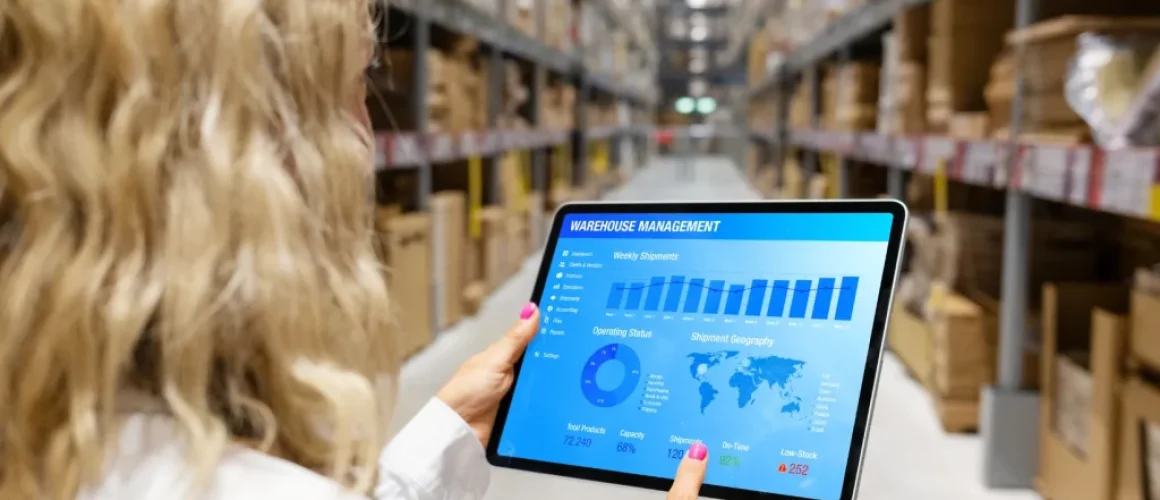
The future of logistics isn’t just about automation; it’s about visibility. While the industry buzzes with the term “smart warehouse,” a truly intelligent facility is built on a foundation of complete, real-time awareness. This is where the concept of a “seeing warehouse” comes into play, and it’s made possible by leveraging the power of RFID in warehousing. Instead of just automating processes, a seeing warehouse uses technology to grant you an unprecedented level of insight into every single item that moves through your supply chain.
At RFIDSolution, we believe that before you can get smart, you must first learn to see. This means moving beyond manual scans and error-prone spreadsheets to a system that provides passive, persistent, and precise data. This article will explore how you can build this foundational visibility and why it’s the most critical step toward genuine warehouse innovation.
Moving from Blind Spots to Total Visibility
Traditional warehousing is plagued by blind spots. Manual inventory counts are time-consuming, disruptive, and notoriously inaccurate. Barcode scanning, while an improvement, is still a line-of-sight technology that requires a person to physically scan each item. This leaves significant gaps in your data. An item can be misplaced, lost, or incorrectly shipped, and you might not know until it’s too late, leading to stockouts, customer dissatisfaction, and lost revenue.
RFID in warehousing fundamentally changes this dynamic. By attaching RFID tags to your assets—be it pallets, cases, or individual items—you create a digital twin for every physical product. These tags can be read automatically and simultaneously by RFID readers, without needing a direct line of sight.

How RFID Creates a “Seeing” Environment
Imagine readers installed at key chokepoints: receiving docks, warehouse aisles, packing stations, and shipping bays. As tagged items move through these zones, their presence is instantly and automatically recorded. This creates a live, dynamic map of your entire inventory.
- Receiving: Instantly verify incoming shipments against purchase orders without opening a single box.
- Put-away: Guide workers to the correct storage location and automatically confirm that items have been placed correctly.
- Picking & Packing: Drastically reduce picking errors by verifying that the right items are being selected for each order.
- Shipping: Ensure 100% shipping accuracy by automatically confirming that every item loaded onto a truck matches the shipping manifest.
This constant stream of data eliminates the blind spots. You know exactly what you have, where it is, and where it’s going at all times.
The Tangible Benefits of a Seeing Warehouse
Achieving total visibility isn’t just a theoretical advantage; it translates into significant, measurable improvements across your operations. The core principle of RFID in warehousing is to replace manual, error-prone tasks with automated, data-driven processes.
| Operational Area | Traditional Method | RFID-Enabled “Seeing” Method | Key Benefit |
| Inventory Counts | Manual, periodic cycle counts | Continuous, automated cycle counting | 99%+ inventory accuracy, elimination of labor costs |
| Labor Efficiency | Workers spend time searching and scanning | Workers are guided by data, tasks are automated | Increased productivity and throughput |

A Real-World Example: Decathlon’s Global Success
To understand the transformative power of this technology, look no further than the global sporting goods retailer, Decathlon. Facing challenges in managing a massive and diverse inventory across its global supply chain, Decathlon turned to RFID to build its own “seeing” infrastructure. They integrated RFID tags at the point of manufacture for all their products.
By implementing RFID from the factory to the store, Decathlon achieved remarkable results. They use RFID for inventory reception, warehouse management, and in-store stock-taking. This end-to-end visibility allowed them to reduce out-of-stocks, improve inventory accuracy to over 99%, and streamline both their logistics and retail operations. The system provides a clear, real-time picture of their entire product ecosystem, a perfect illustration of a seeing warehouse in action.
Building Your Seeing Warehouse with RFIDSolution
Transitioning to a seeing warehouse is a strategic investment in the future of your business. It’s the foundational layer upon which you can build more advanced automation and analytics. With the visibility provided by RFID in warehousing, you can optimize stock levels, improve demand forecasting, and enhance overall supply chain resilience.
We understand that every warehouse is unique. That’s why we offer a comprehensive range of RFID products tailored to your specific needs, from durable RFID tags and labels designed for harsh industrial environments to high-performance readers and antennas. Our team of experts works with you to design and implement a solution that delivers the visibility you need to compete and win.

Why Choose RFIDSolution?
- Customization: We provide custom RFID tags and labels, ensuring they meet the specific requirements of your products and operational environment.
- Quality: With five state-of-the-art production lines, we maintain the highest standards of quality control, delivering reliable products you can trust.
- Expertise: As a B2B-focused manufacturer with extensive experience in major markets like North America and Europe, we understand the challenges of cross-border procurement and logistics.
Conclusion: See More, Do More
The journey to a “smart warehouse” begins with a single, crucial step: building a “seeing warehouse.” By prioritizing visibility with RFID in warehousing, you create a robust foundation for accuracy, efficiency, and intelligence. You empower your team with the data they need to make better decisions, eliminate costly errors, and drive your business forward. Don’t just chase the buzzword of automation; invest in the fundamental power of sight.
After exploring the immense potential of a “seeing warehouse,” you might be ready to take the next step. Whether you are looking to purchase high-quality RFID labels, tags, or cards for your business, or you simply need more information to guide your decision, we are here to help. Visit us at rfidsolution.com to browse our extensive product catalog or to connect with our specialists for a customized solution that will bring unparalleled visibility to your operations.

FAQs
How difficult is it to integrate RFID technology into an existing Warehouse Management System (WMS)?
Most modern Warehouse Management Systems are designed to be compatible with RFID technology. Integration typically involves using middleware, which is a software layer that facilitates communication between the RFID hardware (readers) and your WMS. This middleware processes the raw data from the readers and translates it into a format that your WMS can understand and use. At RFIDSolution, we can provide guidance and work with your IT team or system integrator to ensure a smooth integration process, allowing you to enhance your existing system without needing a complete overhaul.
What is the typical return on investment (ROI) for an RFID implementation in a warehouse?
The ROI for an RFID in warehousing project can be significant and is typically realized through several key areas. These benefits include drastic reductions in labor costs. They come from replacing manual inventory counts and time spent searching for items. Improved inventory accuracy also leads to fewer stockouts and fewer lost sales. Shipping accuracy increases as well, which helps reduce returns and customer dissatisfaction. Initial investment varies depending on tag, reader, and software choices. However, many businesses achieve a positive ROI within 12 to 24 months. Over time, the benefits compound as efficiency and data accuracy continue to improve.



 EN
EN  JA
JA  ZH
ZH