
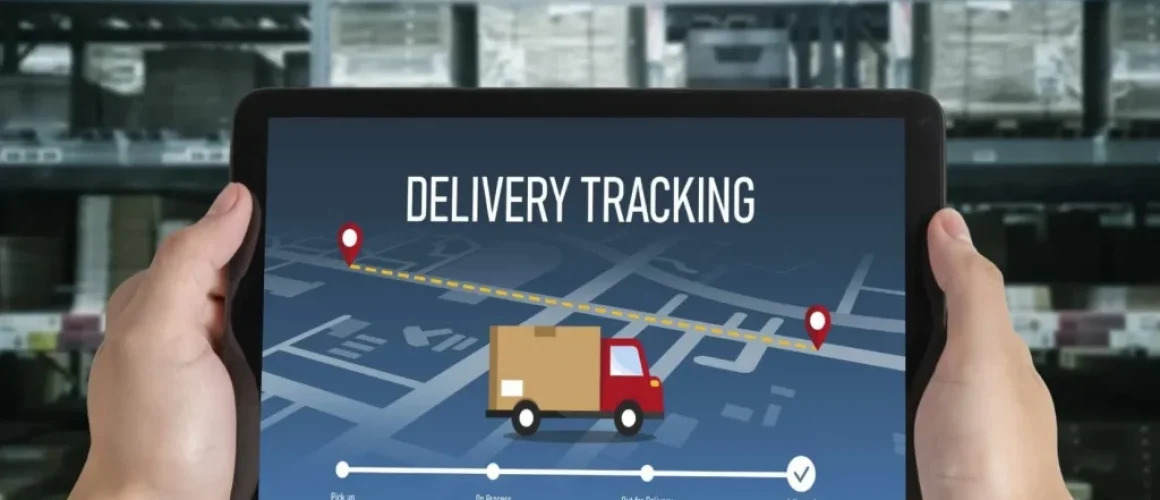
In today’s rapidly evolving e-commerce world, the speed and accuracy of parcel delivery are considered the lifeline of businesses. As consumer demand for “next-day delivery” or even “same-day delivery” continues to grow, traditional inventory management methods are facing unprecedented challenges. In this context, Radio Frequency Identification (RFID) technology has been introduced and is rapidly becoming a core force for industry transformation. This blog post will discuss how this technology is changing e-commerce inventory management.
What is RFID Technology?
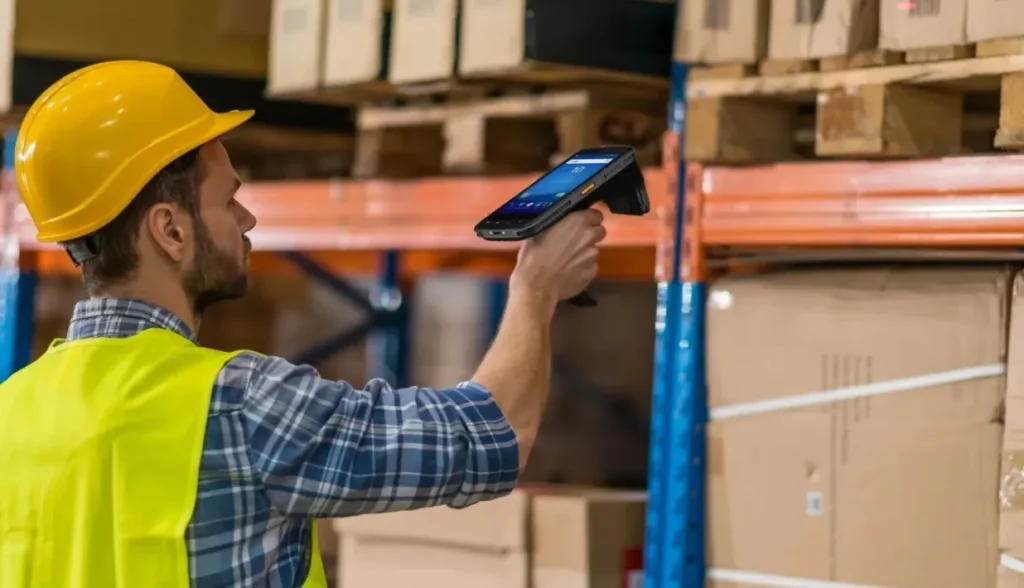
Simply put, RFID (Radio Frequency Identification) is a technology that uses radio waves to automatically identify target objects and acquire relevant data. Unlike barcodes, which require alignment for scanning, RFID tags can be read remotely without direct line-of-sight. Each RFID tag consists of a tiny chip and an antenna, storing the unique identity information of the item. This information can be encrypted and protected, ensuring data security.
In e-commerce warehouses, thousands of items are tagged with RFID labels. The information from these tags can be captured by fixed or handheld readers, enabling real-time inventory monitoring. Depending on the application scenario, RFID can be categorized into Low Frequency (LF), High Frequency (HF), and Ultra-High Frequency (UHF). In e-commerce inventory management, Ultra-High Frequency (UHF) RFID is most commonly chosen due to its longest reading distance and support for high-volume, rapid scanning.
Furthermore, RFID tags can be designed in various shapes and sizes. For example, RFIDSolution’s ultra-thin electronic tags can be seamlessly embedded into clothing hangtags, while durable RFID cards are widely used in access control and payment systems. This flexibility allows RFID technology to be applied across almost all industries, from fast fashion to heavy machinery. Through these technological means, the “identity proof” of items is digitized, thereby firmly laying the foundation for subsequent automated management.
RFID vs. Traditional Barcodes
To better understand why RFID is a superior choice, the table below compares it with traditional barcodes on key performance indicators:
| Feature | Traditional Barcode (Barcode) | RFID Technology |
| Scanning Method | One-to-one, requires line-of-sight | Batch scanning, no line-of-sight required |
| Reading Speed | Slower, tens per minute | Extremely fast, hundreds per second |
| Durability | Easily damaged or stained | More durable, can be embedded inside packaging |
| Data Capacity | Limited, usually product category | Larger, can store unique serial numbers |
| Update Capability | Cannot be changed after printing | Data within the tag can be rewritten multiple times |
| Reading Distance | Typically a few centimeters to one meter | Long distance, up to 10 meters or more |
As shown in the table above, RFID offers significant advantages in efficiency and accuracy. These advantages are further amplified in an e-commerce environment that handles massive orders.
How RFID is Changing E-commerce Inventory Management?

1. Real-time Visibility is Significantly Enhanced
In traditional management models, inventory data is often delayed. The system only updates after items are manually scanned. This delay often leads to the phenomenon of “ghost inventory” – where the system shows stock, but the warehouse is actually empty. With RFID technology, the real-time status of inventory can be accurately grasped. Data is automatically recorded by the system when items enter the warehouse, are moved to shelves, or are picked for dispatch.
This high level of visibility ensures consistency between the inventory displayed on online stores and the actual quantity in the warehouse, effectively preventing customer complaints caused by “overselling.” Furthermore, inventory turnover is significantly optimized. Since the age of each item is clearly recorded, expiring or out-of-season products can be identified and promoted in a timely manner, greatly reducing financial losses due to inventory backlog. At RFIDSolution, tag designs ensure stable signal transmission in complex warehouse environments, making real-time monitoring a reality.
2. Supply Chain Transparency is Unprecedentedly Strengthened
In the global supply chain of e-commerce, an item may pass through factories, distribution centers, customs, and multiple logistics nodes before finally reaching the consumer. Throughout this lengthy process, the risk of goods being lost or misdirected always exists. By deploying RFID readers at every stage, the trajectory of goods can be tracked throughout their journey.
This transparency is not only crucial for brands but also provides a better experience for consumers. When parcel statuses are updated in real-time, consumer anxiety is reduced, and trust in the brand increases. For distributors, the application of RFID technology simplifies cross-border logistics customs clearance and inventory counting, replacing a large amount of paperwork with automated processes, thereby effectively reducing overall operating costs.
3. Picking and Packaging Speed is Greatly Accelerated
Speed is at the core of e-commerce. In large logistics centers, employees need to process thousands of orders daily. With barcodes, each package must be searched for and aligned with a scanner gun. However, with RFID technology, entire boxes of goods can be instantly identified when passing through sensing gates. This means picking errors are minimized, and outbound parcel speed is increased by 3 to 5 times.
4. Human Error is Effectively Reduced
Due to the high degree of automation achieved by RFID systems, the need for human intervention is reduced. During the receiving process, entire pallets of goods can be counted without unpacking. This not only saves significant labor costs but also avoids data entry errors caused by fatigue or oversight. At RFIDSolution, our custom RFID tags offer extremely high read rates, ensuring the stability of data collection.
Success Stories of Renowned Brands
Many globally renowned brands have completely transformed their operating models through RFID technology.

Zara: As a leader in fast fashion, Zara has deployed RFID systems in thousands of its stores and warehouses worldwide. Every garment is embedded with an RFID tag at the factory. This has increased the frequency of inventory counts from once every six months to once a week. Improved inventory accuracy allows Zara to allocate goods more flexibly, reducing inventory backlog. Additionally, Zara utilizes RFID technology to implement “smart fitting rooms,” where screens automatically display other colors and styling suggestions for an item when a customer enters the fitting room with it, greatly increasing conversion rates.
Uniqlo: Uniqlo has introduced RFID self-checkout systems. Customers simply place a basket of clothes into a scanning pool, and the prices of all items are instantly read. In the backend, RFID technology also ensures seamless integration of online and offline inventory, greatly improving the efficiency of omnichannel retail. It is reported that after introducing RFID, Uniqlo’s checkout speed increased by over 50%, and employees’ focus shifted from tedious inventory counting to better customer service.
Walmart: As a retail giant, Walmart requires its suppliers to widely use RFID tags, especially in apparel, home goods, and electronics. This approach has elevated supply chain transparency to new heights and significantly reduced out-of-stock rates. Walmart’s data shows that due to the use of RFID, its inventory accuracy has increased from approximately 60% to over 95%.
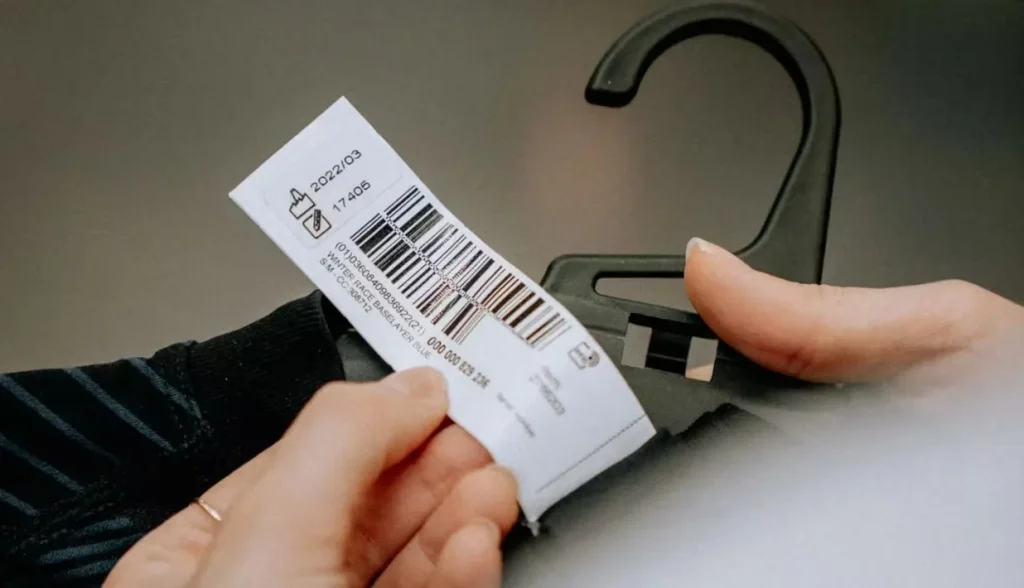
Decathlon: This global sports retailer applies RFID technology across its entire product line. From the factory floor, each item is given a unique digital identity. In Decathlon’s warehouses, automated RFID sorting systems ensure the precise distribution of millions of items daily. This end-to-end application case fully demonstrates the immense potential of RFID in large e-commerce ecosystems. This potential is being increasingly discovered by more and more businesses.
H&M: As another apparel giant, H&M leverages RFID technology to optimize its global supply network. Through accurate inventory forecasting, overproduction is effectively avoided, which not only saves costs but also aligns with its brand’s sustainability strategy. RFID tags are used to ensure the right products are on the right shelves at the right time, maximizing sales opportunities.
In-depth Discussion: RFID’s Full Lifecycle Application in E-commerce Logistics
To more comprehensively understand the value of RFID, we need to observe how it plays a role at each stage of a product’s lifecycle:
Factory End (Source Tagging): On the production line, tags are pre-written with data and attached to products. This means that from the moment of birth, products are integrated into a digital management system.
Warehousing End (Automated Receiving and Dispatch): When goods arrive at e-commerce warehouses, they no longer need to be unpacked and inspected one by one. Entire pallets of goods are moved by forklifts through RFID reading gates, and inbound receipts are automatically generated.
Picking End (Precise Guidance): Pickers can use handheld devices to quickly locate items. If the wrong item is picked, the device will immediately issue an alert. This “error-proofing” mechanism increases order accuracy to nearly 100%.
Last Mile (Parcel Tracking): In sorting centers, parcels with RFID tags are automatically routed to the correct delivery paths. This high degree of automation ensures that parcels do not get “lost” in the logistics network.
Conclusion
In summary, RFID technology is irreversibly transforming e-commerce inventory management. It not only enhances operational efficiency but also reshapes the consumer shopping experience. By tightly binding physical goods with digital information, inventory blind spots are completely eliminated, and human errors are effectively curbed.
From real-time inventory tracking to ultra-fast logistics distribution, the application of RFID gives businesses a head start in fierce market competition. For renowned brands, distributors, and retailers seeking to enhance their competitiveness, now is the optimal time to introduce RFID technology.
Whether you need to improve inventory accuracy or optimize supply chain transparency, our expert team is ready to support you. Let’s work together to make your inventory management smarter, more transparent, and more efficient. In this digital age, don’t let outdated management methods hinder your business growth. Choose RFIDSolution to take your business to the next level.
Recommended Product





 EN
EN  JA
JA  ZH
ZH