
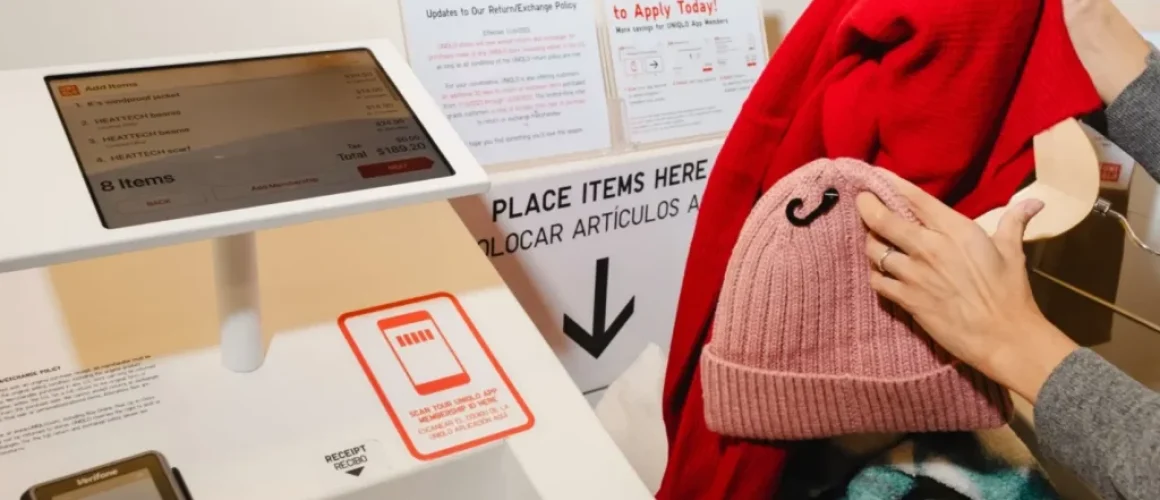
You walk into Uniqlo with an armful of clothes.
Instead of scanning each item one by one, you simply place everything into a checkout box — and within seconds, every product appears on the screen automatically.
No barcode scanning.
No manual counting.
No friction.
So how does Uniqlo’s self-checkout actually work?
The answer is RFID technology — a system that is quietly transforming fashion retail, inventory management, and the customer experience worldwide.
How UNIQLO Self-Checkout Actually Works With RFID Technology
RFID (Radio Frequency Identification) is a wireless identification technology that enables automatic detection and tracking of items using radio waves. It works through the coordination of three core components — RFID tags, RFID readers, and a backend software system. Unlike barcodes, RFID does not require line-of-sight scanning. Multiple apparel items can be read simultaneously, even when stacked or placed inside containers.
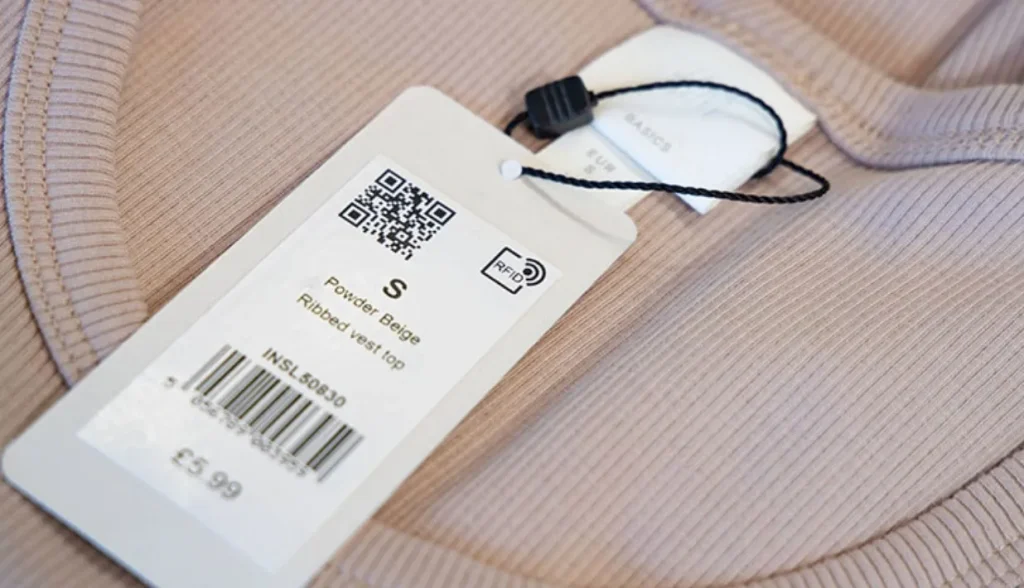
In fashion retail, RFID tags are embedded inside garment hang tags or sewn into care labels. Each tag contains a microchip and antenna that stores unique product data such as SKU, size, color, and style. This makes RFID particularly powerful for fashion retail environments where thousands of SKUs move quickly across warehouses and stores.
Inside a UNIQLO store, every product carries an embedded RFID tag placed in the hang tag or care label.
These tags store product-level data including: Product ID, Size, Color, Style, and Pricing information. At checkout, customers simply place all selected items into the RFID-enabled checkout box. Once activated, RFID readers embedded in the station emit radio signals that instantly scan all tags at once. Within 2–3 seconds, the system:
Captures all item IDs
Matches SKU and pricing data
Calculates total cost
Displays the full order automatically
This creates a fully automated “drop-and-go” checkout flow, eliminating the need for manual scanning entirely.
RFID Is More Than Self-Checkout
If you are focusing only on checkout is a narrow view of what RFID can do in retail. The real value of RFID in fashion retail lies behind the scenes — in inventory visibility, operational efficiency, and supply chain control.
Once RFID is integrated into retail operations, it becomes a continuous data layer that helps retailers understand exactly where every item is, how it moves, and when it needs to be replenished.
Automatic Inventory Tracking Across Every Stage
With RFID, every tagged item becomes digitally traceable from warehouse to storefront.
Instead of relying on manual scans or periodic audits, retailers can automatically capture item-level movement data as products are received, transferred, or sold.
This creates a more connected inventory system where data is continuously updated without extra labor, improving the accuracy of RFID inventory management across the entire retail network.
Reducing Out-of-Stock Situations
One of the most costly problems in apparel retail is out-of-stock inventory.
When a product is unavailable on the shelf, it directly translates into lost sales and a poor customer experience. In many cases, the product is actually in the store — just misplaced or not properly recorded in the system.
RFID helps solve this by improving visibility at the item level.
Retailers can quickly identify missing stock, detect discrepancies, and take action before products become unavailable to customers. This leads to more consistent product availability and fewer missed sales opportunities.
Faster and Smarter Replenishment
Traditional replenishment decisions often rely on delayed or incomplete data.
RFID changes this by giving retailers near real-time insights into product movement and stock levels. Store teams can see exactly which items are running low and which locations need replenishment.
This allows for more responsive restocking processes and reduces both overstocking and understocking issues.
For large apparel chains, this level of visibility can significantly improve supply chain efficiency and reduce unnecessary inventory holding costs.
Locating Misplaced Products in Seconds
In busy retail environments, products are often not truly “out of stock” — they are simply misplaced.
Items may end up in the wrong section, fitting rooms, stockrooms, or even incorrectly labeled areas. Finding them manually can take a long time and disrupt store operations.
With RFID apparel tracking, staff can quickly scan the environment and locate specific items within seconds.
This improves operational efficiency while ensuring that available inventory is actually visible and accessible to customers.

Enabling Smarter Fitting Room Experiences
Smart fitting rooms are becoming an emerging trend in modern retail.
By integrating RFID readers into fitting room areas, retailers can automatically detect which items a customer brings inside. This opens up new possibilities such as:
Displaying product information on screens
Suggesting alternative sizes or colors
Requesting staff assistance instantly
Tracking customer interaction with products
These small enhancements create a more personalized and interactive shopping experience, increasing engagement and conversion rates.
Supporting Buy Online, Pick Up In Store (BOPIS)
Omnichannel retail has become a standard expectation, and services like BOPIS (Buy Online, Pick Up In Store) rely heavily on accurate inventory data.
If inventory records are incorrect, customers may place online orders for items that are actually unavailable in-store, leading to cancellations and frustration.
RFID retail solutions improve the reliability of omnichannel fulfillment by ensuring that stock data is accurate and continuously updated.
This helps retailers fulfill online orders faster, reduce errors, and maintain customer trust across both digital and physical channels.
Overall, RFID is not just a checkout technology.
It is a foundational system that connects inventory, operations, and customer experience into one unified retail ecosystem — and self-checkout is only the most visible part of it.
Why RFID Is Becoming a Retail Standard
Traditional barcode systems were designed for a different era — slower operations, lower SKU complexity, and limited omnichannel requirements.
Modern fashion retail is the opposite:
- Thousands of SKUs per store
- Fast inventory turnover
- Multi-channel fulfillment (online + offline)
- High customer expectation for availability
Barcode systems are now becoming a structural limitation.
| Dimension | Barcode Systems | RFID Systems |
| Scanning method | One item at a time (line-of-sight required) | Multiple items scanned simultaneously (no line-of-sight) |
| Checkout speed | Slow, depends on manual scanning | Fast, automated item detection |
| Staff dependency | High — requires manual scanning & verification | Low — automation reduces manual work |
| Human error risk | High (missed scans, wrong items, misreads) | Low (automatic digital identification) |
| Inventory updates | Delayed, based on scan events | Near real-time visibility |
| Peak-hour performance | Easily becomes a bottleneck | Handles high volume efficiently |
| Operational model | Labor-driven | Data-driven / automated |
That is why leading global retailers are already transitioning to RFID. This shift is already happening across global fashion retail.
Leading brands adopting RFID include Zara, H&M, Decathlon, and UNIQLO — all using RFID to improve inventory accuracy, operational efficiency, and omnichannel performance.
The Real Challenge: RFID Alone Is Not Enough
However, RFID technology alone does not automatically solve operational challenges.
Many retailers successfully deploy RFID at checkout or inventory level, but struggle to connect data across warehouses, stores, and supply chain systems.
This creates a gap between data collection and operational execution.
To fully unlock RFID value, retailers need a unified system that connects every step of the retail workflow — from inbound logistics to in-store sales.
This is where the InvenTrack™ RFID system comes in.
How InvenTrack™ RFID Helps Retailers Gain Full Inventory Visibility
InvenTrack™ is designed as a complete RFID-driven retail execution platform. With this RFID platform, retailers can:
End-to-End Retail Control
InvenTrack connects the full retail lifecycle:
- Inbound receiving
- Warehouse processing
- Store transfer
- Inventory adjustment
- Sales execution
Instead of isolated systems, everything operates within one RFID-driven workflow.
Real-Time Inventory Visibility
Each product is assigned a unique EPC identity.
This allows retailers to:
- Track every item in real time
- Synchronize store and warehouse inventory
- Detect discrepancies instantly
No delayed updates. No blind spots.
Automated Retail Operations
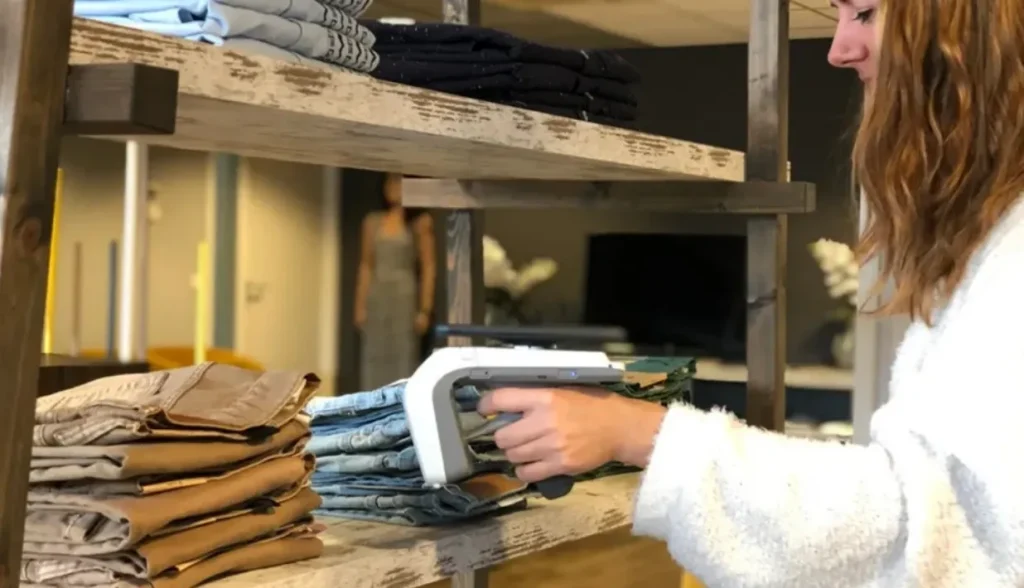
Traditional scanning processes are replaced with bulk RFID identification.
This enables:
- Faster receiving and shipping
- Reduced manual labor
- Higher processing accuracy
Core Functional Modules
Inbound Management
- Automatic RFID receiving
- Faster warehouse check-in
- Reduced human error
Outbound Management
- Efficient order fulfillment
- Batch verification of goods
Inventory Adjustment
- Real-time correction of stock mismatch
- Improved inventory accuracy
LED Locate System
- Visual picking guidance
- Faster item location in warehouses
Sales & Loss Prevention
- POS-level validation
- Exit verification system
- Reduced shrinkage and loss
If your business is exploring RFID adoption or struggling with fragmented inventory visibility, now is the right time to move beyond standalone solutions.
See how InvenTrack™ RFID connects your entire retail operation into a real-time, fully integrated system.
FAQs
Is RFID better than barcodes in retail?
In most modern retail environments, yes. Barcodes require line-of-sight and one-by-one scanning, while RFID can read multiple items simultaneously without direct visibility. This makes RFID faster, more scalable, and more accurate for inventory-heavy industries like fashion retail.
Can RFID track clothing inventory in real time?
Yes. When integrated with retail systems, RFID enables near real-time inventory tracking. As items move through warehouses, stores, or checkout points, their status can be updated automatically, giving retailers much clearer visibility into stock levels.
How accurate is RFID inventory management?
RFID inventory accuracy can reach over 95% when properly implemented. It significantly reduces human error compared to manual barcode scanning and helps retailers maintain more reliable stock records across multiple locations.
What are the benefits of RFID in fashion retail?
RFID brings several key benefits to fashion retailers, including faster checkout, improved inventory accuracy, reduced out-of-stock situations, faster stock counting, better replenishment planning, and stronger omnichannel fulfillment capabilities.
Why is RFID important beyond self-checkout?
While self-checkout is the most visible application, the real value of RFID lies in full inventory visibility. It helps retailers track products across stores and warehouses, reduce operational inefficiencies, and make better data-driven decisions.


 EN
EN  JA
JA  ZH
ZH