

Managing tools across workshops, warehouses, construction sites, or maintenance departments can be challenging when records are handled manually. Tools can be misplaced, checked out without being properly recorded, or difficult to locate when needed. An RFID tool tracking system provides a more efficient way to identify, monitor, and manage tools by combining RFID tags, readers, and asset management software. This guide explains how RFID tool tracking works, what you should consider when choosing a system, and how an integrated solution can improve tool management.
1. What Is an RFID Tool Tracking System?

An RFID tool tracking system uses radio frequency identification (RFID) technology to give each tool a unique digital identity and connect it with an asset record.
A typical system includes three main components:
- RFID tags: Attached to tools and used to provide unique identification.
- RFID readers: Detect and read RFID tags without requiring direct line of sight.
- Asset management software: Stores asset information and manages tool status, movements, check-in/check-out records, and other data.
Instead of relying entirely on manual records, organizations can use RFID data to build a more accurate and centralized view of their tools.
2. How Does RFID Tool Tracking Work?

An RFID tool tracking system typically works through four basic steps.
2.1 Tag Each Tool
An RFID tag is attached to each tool and assigned a unique identification number.
The tag should be selected according to the tool’s material and operating environment. For example, tools with metal surfaces generally require on-metal RFID tags designed to maintain reliable performance when mounted on metal.
The attachment method is also important. Depending on the application, tags may be attached using industrial adhesive, screws, rivets, or other mounting methods.
2.2 Register Tools in the System
After tagging, each RFID tag is associated with a corresponding tool record in the asset management software.
The record can include information such as:
- Tool name and ID
- Department or assigned user
- Current status
- Location
This connects the physical tool with its digital record.
2.3 Capture Tool Movements
When an RFID reader detects a tagged tool, the system can record the relevant event. Depending on the application, organizations can use:
- Handheld RFID readers for inventory checks, tool searches, and field operations.
- Fixed RFID readers at designated locations such as tool rooms, entrances, or checkpoints.
This allows organizations to capture tool movements without manually scanning every item.
2.4 Manage Tools Through the Software
The RFID data becomes useful when it is connected to asset management software. Users can view tool status, check tools in or out, conduct inventories, review asset history, and identify tools that may be missing or overdue. In other words, RFID provides the identification technology, while the software turns that data into actionable asset information.
3. What Problems Can an RFID Tool Tracking System Solve
The value of an RFID tool tracking system is not simply that it can identify a tool. Its real value comes from improving the way organizations manage tools throughout their daily operations.
3.1 Reduce Time Spent Looking for Tools
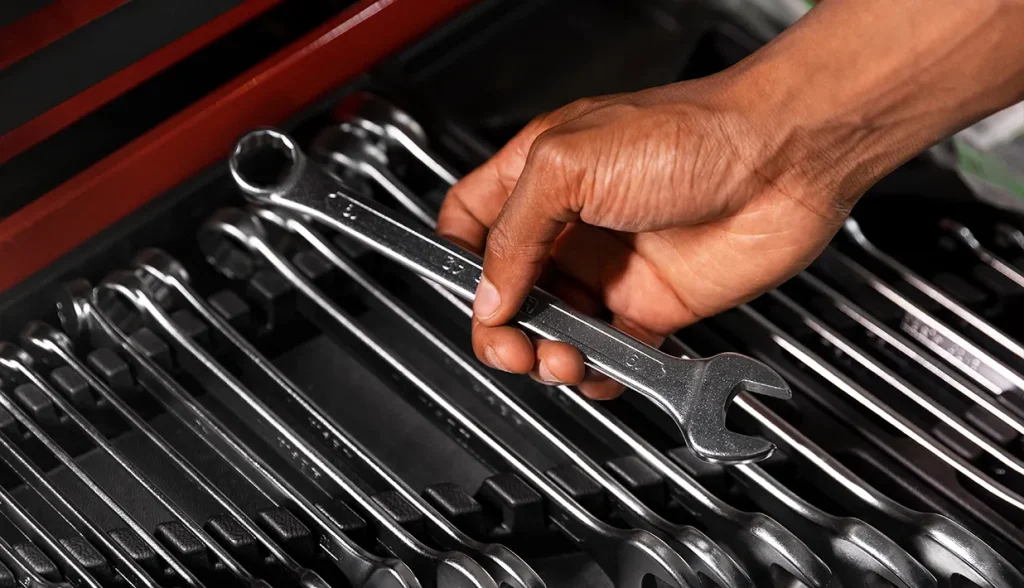
When tools are shared across teams or frequently moved between locations, employees may spend considerable time searching for equipment instead of using it.
With RFID-based asset records, users can check the system to determine a tool’s status or last recorded activity before starting a manual search. This can make it easier to locate tools and reduce unnecessary downtime.
3.2 Improve Accountability for Shared Tools
Shared tools often move between employees, departments, and work areas. Without a consistent tracking process, it can be difficult to determine who currently has a tool. An RFID system can connect tool activity with users, departments, or locations, creating a clearer chain of responsibility.
3.3 Reduce Inventory Workload
Traditional tool inventories often require employees to manually count and record equipment. This can be repetitive and becomes increasingly difficult as the number of assets grows.
RFID can automate much of the identification process, allowing employees to check multiple tagged tools more efficiently and compare physical inventory with digital records.
3.4 Build a Complete Tool History
A tool’s value is not limited to its current location. Organizations may also need to understand how the tool has been used and maintained over time.
By connecting RFID identification with asset management software, businesses can maintain records of:
- Assignments and transfers
- Check-in/check-out activity
- Maintenance and inspections
- Asset status changes
- Inventory history
This provides a more complete view of each tool throughout its lifecycle.
3.5 Improve Asset Utilization
Some tools may be heavily used while others remain idle for long periods. Without reliable usage data, it can be difficult to identify these patterns.
An RFID tool tracking system can provide historical asset data that helps organizations understand how tools are being used and whether resources are being distributed efficiently. This can support better decisions about tool allocation, replacement, and future purchases.
4. How to Choose the Right RFID Tool Tracking System
Choosing an RFID tool tracking system should start with your actual workflow rather than the RFID hardware alone.

4.1 Choose the Right RFID Tags
Consider:
- Whether tools are made of metal
- Tag size and available mounting space
- Required read range
- Exposure to water, chemicals, impact, or heat
- How the tag will be attached
For metal tools, on-metal RFID tags are often the appropriate choice.
4.2 Select the Right RFID Readers
The reader configuration should match how tools move through your operation.
| Requirement | Suitable Reader |
| Periodic inventory | Handheld RFID reader |
| Searching for tools | Handheld RFID reader |
| Tool room checkpoint | Fixed RFID reader |
| Automated movement detection | Fixed RFID reader |
| Flexible tracking across locations | Combination of handheld and fixed readers |
There is no single reader configuration that works for every application. The right choice depends on your facility layout and tracking requirements.
4.3 Evaluate the Asset Management Software
The software is a critical part of an RFID tool tracking system.
Look for functions such as:
- Asset registration
- Tool check-in/check-out
- Location and status management
- Inventory management
- Asset history
- Maintenance records
- Reporting and auditing
A system that only reads RFID tags but does not provide useful asset management functions may not solve the underlying tool management problem.
4.4 Consider Scalability
Your initial requirement may be tool tracking, but your organization may eventually want to track other assets. Therefore, consider whether the system can expand beyond tools to include equipment, IT assets, reusable items, or other valuable assets. A scalable system can help you avoid replacing the entire solution when your asset tracking requirements grow.
5. TrakOn™ for RFID Tool Tracking
For organizations looking for more than RFID identification alone, TrakOn™ Asset Tracking System combines RFID-based identification with broader asset management capabilities.

TrakOn™ can help organizations manage tools and other assets through functions such as asset identification, check-in/check-out, asset visibility, inventory management, and lifecycle tracking.
Instead of treating RFID as a standalone identification technology, TrakOn™ connects RFID data with the information needed to manage assets throughout their lifecycle.
A typical workflow can be represented as:
Tag → Identify → Track → Manage → Analyze
This approach can help organizations improve tool visibility while creating a centralized record of asset activity and status.
6. Conclusion
An RFID tool tracking system can make tool management more visible, efficient, and accountable by connecting physical tools with digital asset records. The right solution should combine suitable RFID tags and readers with software that supports your actual management workflow.
RFIDSolution provides RFID-based tracking systems designed to help organizations improve asset visibility and management. Need a sample kit to test our solution for your project? Contact us today.


 EN
EN  JA
JA  ZH
ZH