
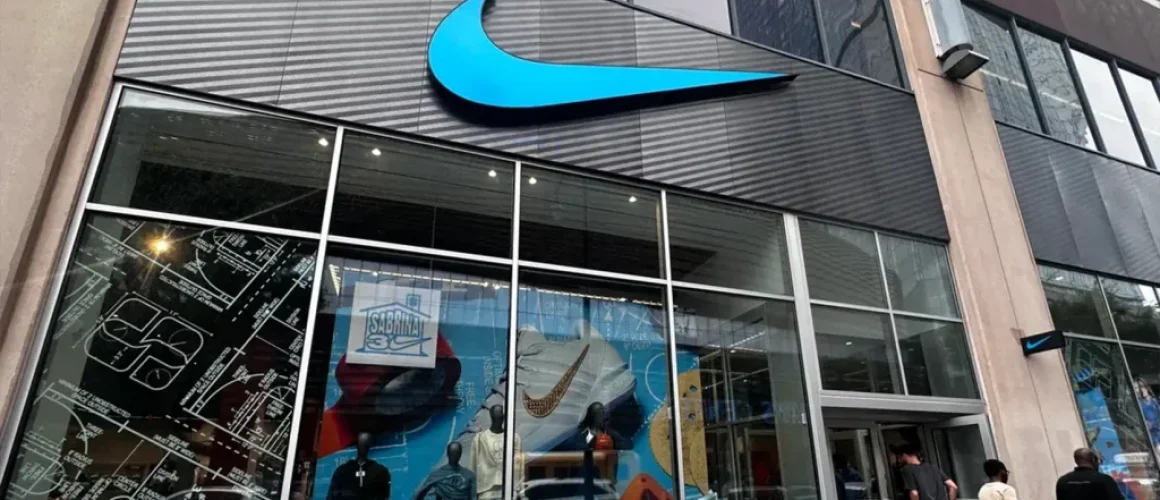
Today, the global counterfeit market poses a significant threat to brand integrity and consumer trust. Premium brands like Nike are constantly seeking innovative ways to protect their products from increasingly sophisticated fakes. This is where RFID Nike becomes a game-changer, using RFID technology to create a virtually unforgeable system for product traceability and authenticity verification. This article explores how Nike leverages RFID to combat counterfeit goods, enhance supply chain visibility, and ultimately safeguard its brand reputation.
1. The Counterfeit Problem: Why Nike Needs Better Protection

1.1 The Scale of Nike Counterfeits
The sneaker market is a colossal industry, valued at approximately $90-100 billion in 2024/2025. Within this lucrative landscape, Nike stands as a prime target for counterfeiters due to its immense popularity and high resale value of limited-edition releases. The proliferation of fake sneakers not only defrauds consumers but also inflicts substantial financial losses on brands, erodes brand trust, and can even pose safety risks if counterfeit products do not meet quality standards.
1.2 Limitations of Traditional Anti-Fake Measures
Barcodes, holographic labels, and QR codes can all be duplicated. A counterfeiter can print a convincing label in minutes. Once a fake product enters the distribution chain, it becomes extremely difficult for retailers—and impossible for consumers—to verify authenticity with visual inspection alone.
2. Why RFID Is Different from Traditional Anti-Fake Methods
RFID works very differently from printed labels.
Each RFID tag contains a unique electronic ID that cannot be altered or cloned like a barcode. When embedded into a Nike product tag at the factory, this chip becomes the product’s digital fingerprint.
Key properties that make RFID ideal for anti-counterfeiting:
- Every tag has a globally unique ID
- Data is stored electronically, not visually
- Tags are integrated into labels or packaging, making tampering evident
- Every scan can be recorded into a traceability database
This means authenticity is no longer based on what a product looks like, but on whether it exists in the official data record.
3. Nike’s Use of RFID: From Manufacturing to Retail
Nike has been a pioneer in adopting RFID technology to streamline its operations and enhance brand protection. The implementation of RFID Nike solutions began around 2018-2019, with the brand strategically integrating these tags across its product lines, including footwear and apparel.

3.1 Tagging at the Source
RFID tags, often in the form of small chips or smart labels, are embedded directly into the product during production. For sneakers, these tags might be discreetly placed in the heel, sole, or even within the hangtag or packaging. This early integration ensures that each product receives a unique digital identity from its inception. This unique ID is then linked to a secure database, establishing an immutable record of the product’s origin.
3.2 Supply Chain Scanning and Traceability
Once tagged, products equipped with RFID chips can be tracked with unprecedented precision throughout the entire supply chain. As goods move from factories to distribution centers and then to retail stores, RFID readers at various checkpoints automatically scan and record their movement. This creates a real-time, comprehensive log of inventory and movement, offering unparalleled visibility.
This level of traceability allows Nike to monitor product flow, identify bottlenecks, and quickly detect any anomalies that might indicate diversion or counterfeiting attempts. The ability to track individual items provides a powerful deterrent against illicit activities within the supply chain.
3.3 RFID at Retail & Point-of-Sale
In stores, RFID is used for rapid inventory counting and checkout. But beyond speed, it serves another purpose: verification. When a product is scanned at POS, the system can confirm whether that RFID ID exists in Nike’s official database. If not, the item is likely counterfeit or unauthorized.
4. How RFID Enables Powerful Anti-Counterfeiting
RFID allows brands to move from passive protection to active detection. With the right system in place, brands can:
- Detect duplicate IDs appearing in different regions
- Identify products scanned outside authorized channels
- Flag missing scan history
- Monitor gray-market diversion
- Verify authenticity at any point in the lifecycle
5. BrandGuard™: Enhanced Brand Protection with RFID
For brands looking to emulate Nike’s success in leveraging RFID for anti-counterfeiting and traceability, a comprehensive solution like our BrandGuard™ system offers a powerful and accessible pathway. BrandGuard™ is a complete RFID-based platform designed to provide enhanced brand protection and supply chain transparency.

5.1 What Is BrandGuard™ System?
The BrandGuard™ system is an all-encompassing RFID solution that integrates advanced tagging, secure data management, and user-friendly authentication tools. It provides a robust framework for brands to implement their own anti-counterfeiting and traceability programs, mirroring the sophisticated capabilities deployed by industry leaders. The system is built to offer a seamless experience from product inception to consumer verification.
5.2 How BrandGuard™ Complements RFID Deployment
BrandGuard™ complements a brand’s RFID deployment by offering a centralized cloud traceability database, which serves as the secure repository for all product data. This ensures that every RFID tag’s unique ID and associated product information are securely stored and accessible for verification. The system also facilitates tamper-evident RFID encoding at the product source, ensuring that the tags are integrated in a way that makes removal or alteration immediately apparent.
6. Consumer Verification: How Buyers Confirm Nike Product Authenticity
Beyond internal supply chain benefits, RFID Nike technology empowers both retailers and consumers to verify product authenticity. This direct verification capability is crucial in building trust and combating the illicit trade of fake goods.
6.1 RFID Scanning in Store
Retailers play a critical role in the fight against counterfeits. With RFID-enabled systems, store associates can easily scan received shipments to confirm the authenticity of products before they are even placed on shelves. This instant verification process ensures that only genuine Nike products are available for purchase, protecting both the brand and its customers from fraudulent items. It also streamlines inventory receiving and reduces the potential for human error.
6.2 Consumer-Level Authentication

One of the most impactful applications of RFID is empowering consumers directly. Consumers can use NFC-enabled phones or dedicated authentication apps to scan the embedded RFID tag in their Nike products. Upon scanning, the app can connect to Nike’s secure database, instantly confirming the product’s legitimacy and providing details about its origin. This direct, transparent, and easy-to-use verification method gives consumers peace of mind and reinforces their confidence in the brand.
7. The Future of RFID in Fashion & Footwear
The application of RFID technology in the fashion and footwear industry is continuously evolving, with exciting future possibilities.

7.1 NFT + RFID Hybrid Authenticity
An emerging trend is the combination of RFID with Non-Fungible Tokens (NFTs). This hybrid approach links a physical product, authenticated by its RFID tag, to a unique digital token on a blockchain. This creates an ultimate proof of ownership and authenticity, providing an unalterable digital record that can be transferred with the physical product. This is particularly relevant for high-value collectibles and limited-edition items.
7.2 Resale Market Verification
The burgeoning resale market for sneakers and luxury goods presents a new challenge and opportunity for RFID. By integrating RFID verification into resale platforms, consumers can confidently buy and sell pre-owned items, knowing that their authenticity can be easily confirmed. This adds a layer of trust and transparency to a market often plagued by fakes.
7.3 Smart Connected Products
Looking further ahead, RFID can enable a future of smart, connected products. Imagine smart lockers that automatically verify and dispense products, automated returns processes, or personalized shopping experiences triggered by an RFID-enabled item. These innovations promise to further enhance efficiency, convenience, and customer engagement.
8. Conclusion
Nike’s adoption of RFID demonstrates how a brand can turn every product into a uniquely identifiable asset, traceable from factory to consumer. The strategy behind Nike is not just about operational efficiency—it’s about protecting brand integrity in a world full of sophisticated counterfeits.
For brands looking to achieve the same level of protection, our BrandGuard System provides the infrastructure to deploy RFID for real anti-counterfeiting, real traceability, and real-time visibility. We provide sample kits so brands can test RFID anti-counterfeiting and traceability in real scenarios before full deployment.





 EN
EN  JA
JA  ZH
ZH