
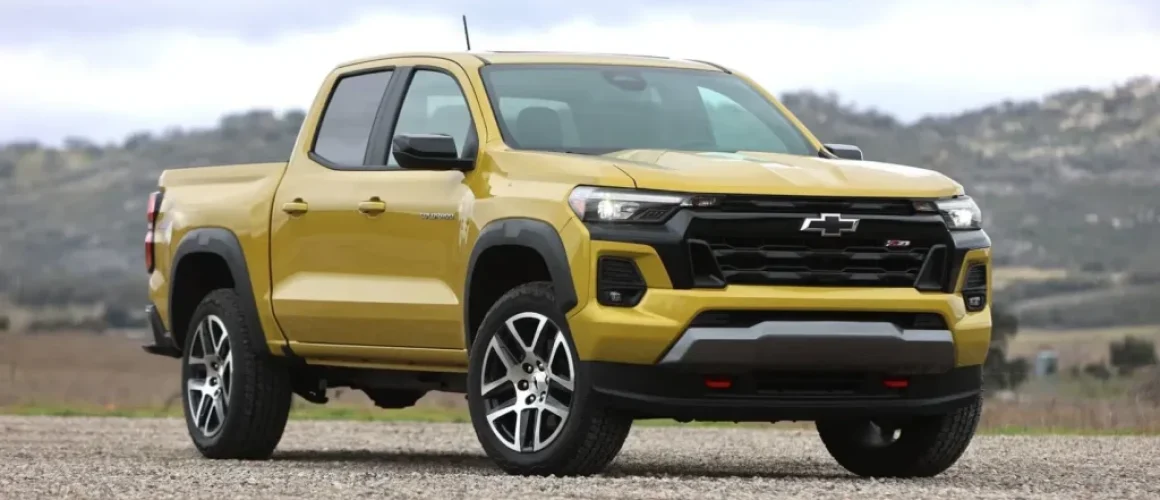
In the world of modern automotive manufacturing, efficiency and precision are the core pillars of success. Chevrolet, a globally recognized automotive brand, has always been at the forefront of optimizing production processes. To achieve the ultimate perfection of the Just-In-Time (JIT) production model, RFID (Radio Frequency Identification) technology is extensively applied within Chevy inventory and manufacturing strategies. This article explores how RFID technology helps Chevrolet eliminate production waste, improve inventory transparency, and ultimately achieve more efficient supply chain management.
Part 1: What Is Just-in-Time (JIT) Production and the Challenges It Poses in the Automotive Industry

Core Definition of JIT
Just-In-Time (JIT), also known as the Toyota Production System, is a management philosophy aimed at reducing waste, lowering inventory costs, and increasing efficiency. In a JIT model, parts are delivered to the production line only when needed, and products are manufactured only when there is demand. This system relies on a “pull” mechanism, where downstream demand determines upstream supply.
JIT Pain Points in Automotive Manufacturing
For a brand like Chevrolet with complex product lines (such as Silverado pickups and Corvette sports cars), implementing JIT presents significant challenges. A modern Chevrolet vehicle consists of tens of thousands of parts; even a minor delay or inventory error can cause an entire production line to halt.
- Supply Chain Opacity: Traditionally, it was difficult for management to obtain the exact real-time location of critical parts during transit.
- Human Operational Errors: Barcode scanning requires manual alignment. On high-speed, large-scale production lines, missed or incorrect scans are common.
- Disorganized Asset Management: Expensive molds and specialized tools often go “missing” in massive factories, wasting valuable production time during the search.
To address these challenges, RFID technology has become a critical tool for perfecting the JIT strategy.
Part 2: Multidimensional Applications of RFID in Chevrolet Manufacturing

In Chevrolet factories, RFID tags are deployed at every stage, from parts receiving to final vehicle assembly. Below are several in-depth application scenarios of RFID in Chevrolet’s inventory and production strategy:
“Digital IDs” for Parts: Real-Time Tracking and Traceability
Chevrolet introduced innovative “Smart Bolts” in its Gen 5 small-block engine production line. These bolts contain embedded RFID chips that travel with the engine blocks and cylinder heads through machining and assembly.
- Automated Recording and Monitoring: As the engine passes key workstations, RFID readers automatically record its status, processing parameters, and timestamps without human intervention. This ensures 100% data accuracy.
- Precise Serialization Management: The system ensures that specific components (such as pistons and connecting rods) for each engine can be accurately tracked. In the event of a future quality recall, Chevrolet can identify affected vehicles within seconds rather than conducting a blind, large-scale recall.
“Radar System” for Tools and Assets
Automotive manufacturing requires thousands of specialized tools, molds, and mobile equipment. A study by General Motors (GM), Chevrolet’s parent company, showed that before RFID, hundreds of millions of dollars were lost annually due to missing or misplaced tools.
- 24/7 Asset Visibility: By attaching industrial-grade RFID tags to tens of thousands of critical tools, workers can locate required equipment in seconds using handheld terminals or a factory-wide network of fixed readers.
- Predictive Maintenance: RFID tags store not only location but also tool usage frequency. When a mold reaches a preset lifespan, the system automatically intercepts it from the JIT process for maintenance, preventing sudden failures on the production line.
Flexible Assembly of Work-in-Progress (WIP)
Chevrolet production lines often assemble multiple models and configurations simultaneously. For instance, a base-model Silverado might be followed immediately by a fully-loaded luxury version.
- Smart Guidance System: RFID tags are mounted on the pallets carrying the vehicle bodies, containing all individual configuration data for that vehicle. When the vehicle reaches a workstation, the RFID system immediately instructs assembly robots or workers on which interior color or gearbox specification to install.
- Eliminating Production Bottlenecks: Real-time production updates allow the dispatch center to dynamically adjust the load at each workstation. If a bottleneck occurs, the system automatically optimizes the pace of subsequent vehicles to keep the JIT flow smooth.
Part 3: How RFID Fundamentally Enhances JIT Inventory Strategies

Eliminating “Shadow Inventory” and “Buffer Inventory”
Before RFID, data lags often forced warehouse managers to order an extra 5%-10% of parts “just in case.” These extra parts, known as buffer inventory, tied up capital and storage space.
- Real-Time Transparency: With RFID, every inventory movement is automatically triggered. Management sees inventory data that reflects the actual physical site. This high level of certainty allows Chevrolet to minimize buffer inventory, truly achieving the “zero waste” goal of JIT.
Automated Replenishment Triggers (Digital Kanban)
Traditional JIT relies on physical “Kanban” cards. RFID upgrades this to “E-Kanban.”
- Demand Pull: When an RFID reader on the production line detects that a bin of parts is empty, it immediately signals the ERP system. The system automatically generates a replenishment order, notifying the supplier or internal warehouse to deliver. This process happens in milliseconds, ensuring logistics always stay ahead of production consumption.
Significantly Reducing Operational Costs and Risks
- Ending Asset Loss: GM has recovered tens of thousands of lost assets through RFID technology. In a JIT environment, losing one critical mold could mean millions of dollars in downtime losses. RFID reduces this risk to nearly zero.
- Revolutionizing Inventory Audits: Annual full-factory audits that used to require a three-day shutdown can now be completed in a few hours by a few employees with handheld devices.
Part 4: In-Depth Case Study—Quantifiable Benefits at the Chevrolet Plant
According to data reports from GM following RFID pilot projects at major plants (such as the Orion Assembly Plant), the quantifiable results are impressive:
- Financial Savings: Optimizing the tracking of over 12,000 high-value assets is estimated to save the company over $20 million annually. Expanding this system to container and mobile device management could bring potential annual savings to over $42 million.
- Efficiency Gains: The time to identify and locate critical tools was reduced by 85%. This allows workers to spend more time on value-added production rather than searching for tools.
- Data Accuracy: Real-time inventory data accuracy jumped from 60% to over 95%. This 35% improvement is central to achieving precise JIT scheduling and avoiding emergency logistics costs.
- Return on Investment (ROI): Due to the use of cost-effective passive RFID tags, the initial investment for the project was fully recovered through cost savings in less than 18 months.
Conclusion
RFID technology is more than just an electronic tag; it is the “eyes and ears” of modern smart manufacturing and digital supply chains. For Chevrolet, the application of RFID has pushed traditional Just-In-Time (JIT) production to an unprecedented level of precision. By achieving full digitalization and real-time tracking of parts, tools, and vehicles, Chevrolet has not only significantly reduced inventory costs but also established high standards for production flexibility and quality in the competitive global automotive market.
At RFIDSolution, we recognize the immense potential of this technology in industrial automation and brand management. If you wish to perfect your inventory strategy and enhance operational efficiency through RFID technology, just as Chevrolet has, please feel free to contact us.
Recommended Product





 EN
EN  JA
JA  ZH
ZH