
Inaccurate inventory costs businesses—lost sales, wasted labor, and frustrated customers. Traditional methods like barcodes and paper logs are slow, error-prone, and no longer enough. RFID technology changes that. With real-time visibility and automated tracking, businesses can reduce stockouts, improve accuracy, and streamline operations. Let’s explore how RFID turns guesswork into precision.
What is RFID and How It Works
RFID, or Radio-Frequency Identification, is a technology that allows businesses to automatically track and manage inventory in real time. Unlike traditional methods such as barcodes or paper logs, RFID doesn’t require line-of-sight scanning. Each RFID tag contains a small chip and antenna, which communicate with RFID readers to instantly update your inventory system.
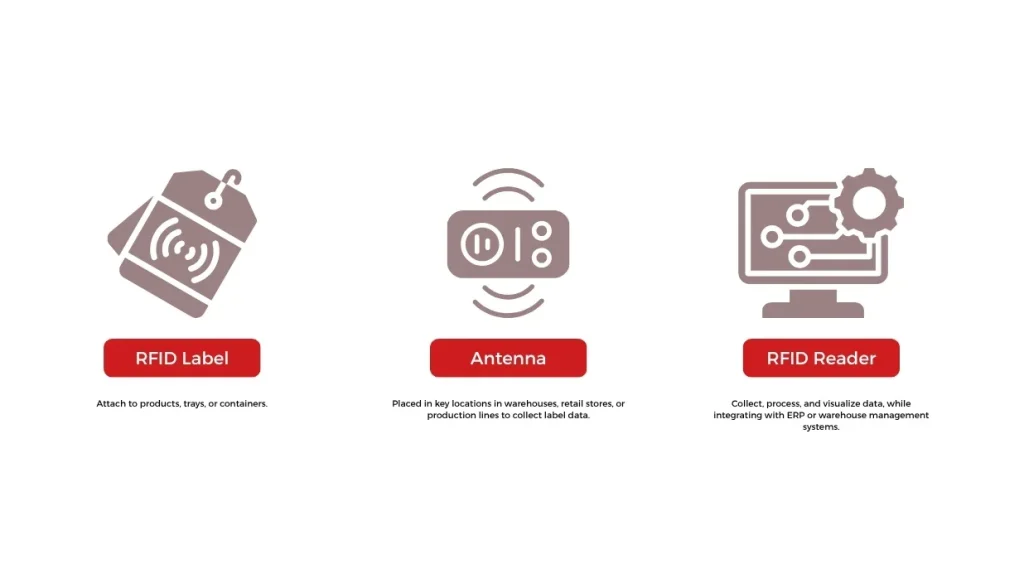
A typical RFID setup includes:
- RFID tags: Attached to products, pallets, or containers.
- Readers and antennas: Placed strategically in warehouses, retail stores, or production lines to capture tag data.
- Inventory management software: Collects, processes, and visualizes the data, integrating it with your ERP or warehouse management system.
The result? Businesses gain real-time visibility into their inventory, reduce human errors, and eliminate the tedious, time-consuming process of manual stock counts. Whether it’s a warehouse with thousands of SKUs or a retail store with fast-moving products, RFID provides a level of automation and accuracy that traditional methods simply can’t match.
How RFID Transforms Inventory Management
RFID technology transforms inventory management by changing the way businesses handle stock at every step. Unlike traditional methods like barcodes or paper logs, RFID automates key processes, providing real-time visibility and precise tracking.
Automatic Item Tracking
Each RFID tag communicates its location and status automatically. This eliminates the need for line-of-sight scanning, reduces human errors, and ensures every item is accounted for as it moves through the warehouse, store, or supply chain.
Real-Time Inventory Updates
RFID readers instantly capture data from tagged items, updating inventory levels in real time. Managers no longer rely on delayed manual counts or periodic scans, which means stock information is always accurate and actionable.
Location and Movement Monitoring
RFID allows businesses to track exactly where every item is, whether on shelves, in storage, or in transit. Misplaced items are identified immediately, speeding up retrieval and reducing inventory shrinkage.
Automated Alerts and System Integration
Low-stock items, misplaced products, or slow-moving inventory can trigger automatic notifications. All data feeds seamlessly into ERP or warehouse management systems, enabling proactive replenishment and smarter operational planning.
These operational changes set the stage for businesses to reduce stockouts and streamline operations, the two outcomes that matter most to decision-makers.
Benefits of Using RFID in Inventory Management
Beyond transforming operations, RFID delivers tangible business benefits that directly impact revenue, efficiency, and decision-making.
Reduce Stockouts
With RFID, businesses can maintain accurate, real-time stock information, which helps:
- Trigger automatic replenishment for low-stock items.
- Forecast demand using actual inventory movement.
- Avoid lost sales and frustrated customers by keeping products available.
Streamline Operations
RFID also improves day-to-day workflows by:
- Completing inventory counts faster and with less labor.
- Minimizing human errors in stock handling and order fulfillment.
- Allowing staff to focus on higher-value tasks instead of manual checks.

Improved Inventory Accuracy
Automation and real-time tracking boost overall inventory accuracy, reducing discrepancies and giving managers confidence in their data.
Better Decision Making
RFID provides actionable insights that enable data-driven procurement, replenishment, and resource allocation, ensuring smarter, faster decisions.
Enhanced Operational Efficiency
Processes are more predictable and scalable, with seamless integration into ERP/WMS systems. Businesses save time, reduce costs, and increase productivity across warehouses or retail locations.
Together, these benefits directly support the goals highlighted in the title: reducing stockouts, streamlining operations, and improving inventory accuracy.
Industries That Benefit Most from RFID Inventory Management
RFID technology provides significant advantages for businesses that need accurate, real-time inventory management. Companies dealing with fast-moving products, high SKU counts, or multi-location stock can dramatically reduce errors, prevent stockouts, and streamline operations. Here’s a detailed breakdown by major industry and high-demand sub-sectors:
Retail
Retailers need to keep shelves stocked, reduce lost sales, and manage high SKU volumes across multiple locations. RFID improves inventory management by automating stock counts, providing real-time visibility, and enabling timely replenishment.
- Apparel chains Frequent seasonal inventory changes, high SKU diversity, and fast-moving products make accurate stock counts essential. RFID allows automated counts and better replenishment planning.
- Supermarkets & Grocery stores Large volumes of perishable goods require real-time tracking to avoid stockouts and overstock. RFID helps maintain optimal inventory levels.
- Electronics retail High-value items like smartphones, laptops, and accessories need accurate tracking to prevent losses and ensure availability.
Warehousing & Distribution
Warehouses manage thousands of SKUs daily. Manual processes are slow and error-prone, leading to misplaced stock and inefficient replenishment. RFID optimizes warehouse inventory management through automated tracking, real-time updates, and ERP/WMS integration.
- E-commerce fulfillment centers Fast-moving online orders require accurate real-time inventory to meet customer expectations.
- Third-party logistics (3PL) warehouses Multi-client operations benefit from RFID to prevent errors, improve order accuracy, and speed up cycle counts.
- Cold storage and perishable goods warehouses RFID ensures precise stock levels and reduces losses due to mismanagement.
Manufacturing
Manufacturers rely on timely availability of raw materials and components to keep production lines running. RFID transforms inventory control by providing real-time stock visibility, reducing overstock, and preventing shortages.
- Electronics manufacturing Track components across multiple production stages to avoid line stoppages.
- Automotive parts manufacturing Ensure critical parts are available for assembly, reducing downtime and production delays.
- FMCG production lines Manage fast-moving consumables efficiently, avoiding overstock and storage issues.
Healthcare & Pharmaceuticals
Accurate inventory management is critical for patient safety and regulatory compliance. RFID provides real-time stock visibility, tracks expiration dates, and ensures essential supplies are always available.
- Hospital pharmacies Medications must be accurately accounted for to avoid stockouts and errors.
- Medical equipment suppliers Track high-value devices and consumables across multiple locations.
- Vaccine and biologics storage Maintain precise stock levels and expiry tracking, ensuring compliance and safety.
Hospitality & Service Industry
Hotels, resorts, and restaurants manage high volumes of consumables and equipment, where inventory mismanagement can impact guest satisfaction and operational efficiency.
- Hotels and resorts Track linens, toiletries, and consumables to prevent shortages and streamline replenishment.
- Restaurants and catering Monitor kitchen inventory and ingredients to avoid stockouts during peak hours.
- Event management companies Track supplies and equipment for conferences, festivals, or large events efficiently.
Across industries, RFID enables businesses to manage inventory with real-time visibility, automated updates, and actionable data. By focusing on accurate stock levels, faster counts, and proactive replenishment, companies can reduce stockouts, optimize operations, and improve overall inventory efficiency.

Practical Implementation Tips for RFID Inventory Management
Implementing RFID for inventory management doesn’t have to be overwhelming. By following a structured approach, businesses can start small, achieve measurable results, and scale efficiently. Here are practical steps for successful deployment:
Identify High-Priority SKUs or Locations
Not all items need RFID immediately. Focus on areas where inventory errors or stockouts have the biggest operational impact:
- Retail: High-demand or high-value SKUs such as seasonal apparel, electronics, or fast-moving groceries.
- Warehousing & Distribution: Frequently picked or high-value pallets, cartons, or multi-client stock.
- Manufacturing: Critical components that frequently cause production delays.
Start with a pilot program targeting these items to validate ROI and demonstrate quick wins.
Integrate with Existing ERP or WMS
For maximum efficiency, RFID data should flow seamlessly into existing systems:
- Ensure your RFID readers and tags communicate with your ERP or Warehouse Management System (WMS).
- Automate inventory updates to reduce manual entry and errors.
- Set up automatic alerts for low stock, misplaced items, or slow-moving inventory.
Integration enables real-time visibility and proactive inventory decisions.
Develop a Scanning and Placement Strategy
Proper tag placement and reader coverage are critical for accurate inventory management:
- Place RFID readers at key points like receiving docks, storage aisles, and shipping areas.
- Tag items consistently to ensure every unit is detected during scans.
- Define clear scanning procedures to avoid missed reads.
Accurate inventory counts and reliable stock visibility.
Train Staff and Define KPIs
Staff engagement is essential for adoption and success:
- Train employees on how to handle RFID-tagged items and interpret system alerts.
- Define KPIs such as inventory accuracy, cycle count time, and stockout frequency.
- Regularly review KPIs to refine workflows and improve results.
Staff becomes empowered, processes are optimized, and ROI is maximized.
Scale Gradually and Monitor Results
After a successful pilot, expand RFID across more SKUs, locations, or warehouses:
- Analyze pilot results for inventory accuracy improvements, reduced stockouts, and time savings.
- Gradually increase RFID coverage while continuously monitoring KPIs.
- Adjust workflows and alerts based on lessons learned.
Phased scaling minimizes disruption and ensures ROI is sustainable.
Get Started with InvenTrack™ RFID
RFID technology transforms inventory management by reducing stockouts, improving accuracy, and streamlining operations. InvenTrack™ RFID makes this transformation simple, scalable, and measurable for businesses across retail, warehousing, manufacturing, healthcare, and hospitality.
Key advantages of InvenTrack™ RFID include:
- Real-time inventory visibility Know exactly what’s in stock, where, and when.
- Automated tracking and replenishment Minimize human errors and prevent stockouts.
- Seamless ERP/WMS integration Synchronize data and workflows without disruption.
- Scalable deployment Start small with high-priority SKUs and expand easily.
- Actionable analytics Optimize purchasing, replenishment, and operational efficiency.
Take control of your inventory and experience the benefits firsthand. Get a Free Demo to evaluate performance, ROI, and workflow integration.
FAQs
1 Does RFID work with multiple locations or franchises simultaneously?
Yes. Modern RFID systems can centralize inventory data across multiple warehouses, stores, or franchise locations. This enables real-time visibility and consistent stock management across your entire network.
2. Is inventory data from RFID secure?
Absolutely. RFID systems use secure protocols to protect your data. Access can be restricted by role, and sensitive inventory information is encrypted both in transit and at rest, ensuring data privacy and compliance.
3. Can RFID scale as business grows or SKUs increase?
Yes. RFID solutions are highly scalable. You can start with key SKUs or locations and expand gradually as your inventory grows, adding more tags, readers, or integration points without disrupting existing operations.
4. Can it support multiple units per pallet or bin-level tracking?
Yes. RFID can track items at unit, carton, pallet, or bin level, depending on your operational needs. This flexibility helps manage bulk storage, high-density warehouses, and complex picking processes efficiently.
5. How long does it take to see a measurable return on investment?
Many businesses notice improved inventory accuracy and reduced stockouts within weeks of implementation. Full ROI, including labor savings, reduced shrinkage, and optimized replenishment, is typically realized within 12–18 months.



 EN
EN  JA
JA  ZH
ZH