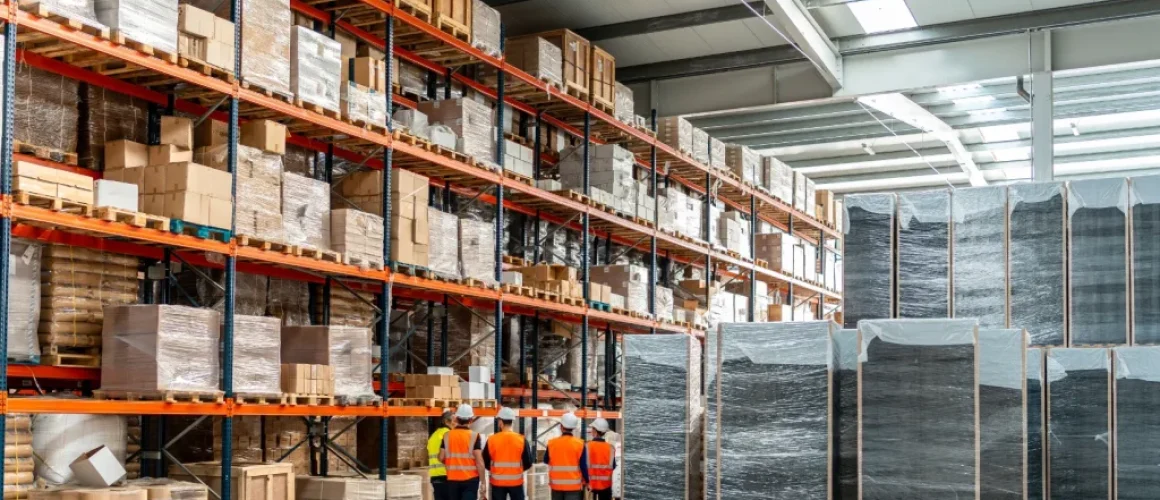
The modern warehouse demands efficiency, accuracy, and speed, and the foundation of achieving this lies in the right data capture technology. While traditional warehouse rf scanners have long been the industry standard, the shift toward a truly optimized, future-proof supply chain requires looking beyond basic barcode scanning and embracing the power of RFID. We, at RFIDSolution, understand that you are seeking high-quality, cost-effective solutions to gain a competitive edge. This article explores how advanced RFID technology is redefining warehouse management and offering superior operational insights.
The Operational Imperative: Why Upgrade from Basic Scanning?
For years, handheld barcode scanners served their purpose, providing a simple, linear method for inventory tracking. However, in high-volume, complex environments, the limitations of line-of-sight scanning become a significant bottleneck. The time spent manually locating, aiming, and scanning individual items directly impacts labor costs and throughput.
The Key Advantages of RFID Over Traditional Warehouse RF Scanners
RFID technology introduces a paradigm shift in how inventory is managed, offering substantial improvements over older warehouse rf scanners. The core difference is the ability to read multiple tags simultaneously without a direct line of sight.
Here are the primary operational advantages:
- Speed and Efficiency: RFID readers can scan hundreds of items per second, drastically reducing the time required for cycle counting and receiving.
- Accuracy: By eliminating human error associated with manual scanning, RFID achieves near-perfect inventory accuracy, minimizing discrepancies and stockouts.
- Non-Line-of-Sight Reading: Tags can be read through boxes, packaging, and even from a distance, removing the need to physically handle or orient items.

Implementing a Touchless Inventory System
Moving to an RFID-based system transforms key warehouse processes from labor-intensive tasks into automated, seamless operations. This transition is not just about replacing hardware; it’s about redesigning workflows for maximum productivity.
Receiving and Putaway: Instantaneous Verification
When a shipment arrives, the process of receiving goods is often a major choke point. With RFID, this changes completely. As pallets or cartons pass through an RFID gate or are scanned by a handheld reader, the entire contents are verified against the purchase order in seconds. This instantaneous verification allows for immediate putaway, eliminating staging delays.
Cycle Counting: From Days to Minutes
One of the most significant gains is in inventory auditing. A full physical inventory count that might take a team of workers days using traditional warehouse rf scanners can be completed in a fraction of the time with RFID. A single operator can walk through an aisle, and the RFID reader automatically captures all tagged items, providing real-time stock levels.

Selecting the Right RFID Solution for Your Warehouse
Choosing the correct RFID hardware and tags is crucial for maximizing your return on investment. The solution must align with the specific materials, environment, and scale of your operations.
Factors Influencing RFID Reader Choice
When selecting the right RFID reader to replace or augment your existing warehouse rf scanners, consider these three critical factors:
- Read Range and Power: Determine the necessary distance for reading tags (e.g., handheld for close range, fixed readers for dock doors or large areas).
- Connectivity: Ensure compatibility with your existing Warehouse Management System (WMS) via Wi-Fi, Bluetooth, or Ethernet.
- Form Factor: Choose between rugged handheld devices for mobility or fixed portals for automated tracking at choke points.

Conclusion
The evolution of data capture technology from basic warehouse rf scanners to sophisticated RFID systems is an essential step for any business aiming for peak operational performance. We, RFIDSolution, are committed to providing the high-quality, customizable RFID cards, tags, and labels you need to make this transition seamless and cost-effective. To explore our full range of products and discuss a tailored solution for your procurement needs, visit us at rfidsolution.com.
FAQs
How does the cost of RFID tags compare to traditional barcode labels?
While the initial unit cost of an RFID tag is higher than a standard barcode label, the total cost of ownership is often lower. This is due to the massive savings generated by reduced labor time for inventory counts, improved accuracy that minimizes loss from shrinkage, and faster throughput in receiving and shipping operations. The long-term operational efficiency quickly outweighs the marginal increase in tag cost.
Are RFID systems difficult to integrate with existing Warehouse Management Systems (WMS)?
Most RFID readers and middleware solutions offer standard APIs and data formats (like XML or JSON) that can easily communicate with established WMS platforms. We recommend working with an experienced integrator to ensure a smooth, secure data flow between the RFID system and your existing IT infrastructure.
Recommended Product
Handheld UHF RFID Reader – ISO/IEC 18000-63 – 865-868MHz or 902-928MHz
Powered by the CM710-1 module and the Impinj® E710 engine, this handheld reader supports EPCglobal Class 1 Gen 2 and ISO/IEC 18000-63 protocols. It also includes advanced standards like GS1 EPC Gen2v2 Authenticate and ISO/IEC 29167-11 for cryptographic authentication. It further enhances tag performance with Impinj® Gen2X support. Designed with a fast octa-core CPU, […]